
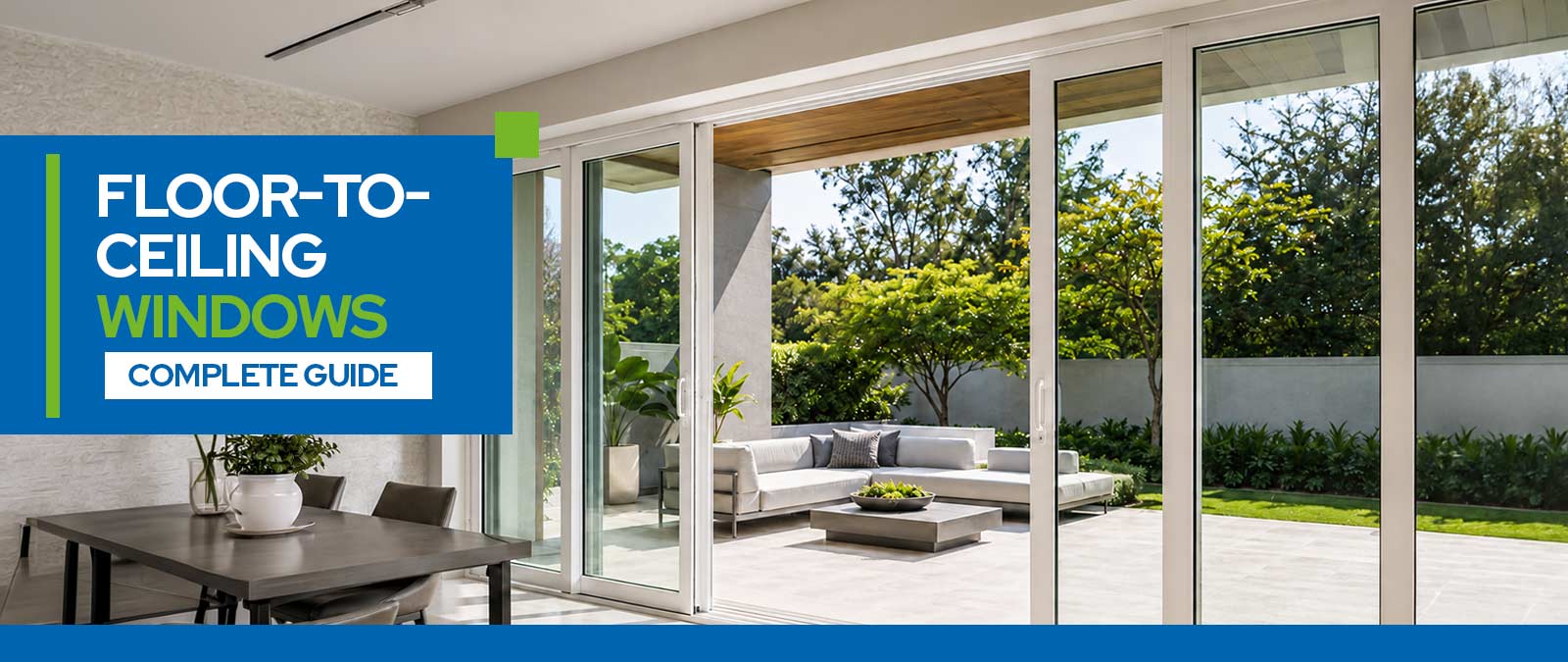
Floor-to-Ceiling Windows: Types, Benefits, Cost and Design Ideas for Modern Homes
Floor-to-ceiling windows are large windows that run from near the floor to the ceiling. They bring in more sunlight and give you a wider view of the outside. They can be fixed or openable, and some designs can be combined with sliding doors.
For Indian homes, there are a few things to check before choosing large windows. Too much glass can bring in heat, while rain and dust can make cleaning harder. Privacy, ventilation, and safety are also important. The glass, frame, and installation also affect how the window works.
This guide covers the types of floor-to-ceiling windows, their benefits and drawbacks, cost, and design ideas for homes, villas, apartments, and offices.
Contents
- 1 Quick answer: Are floor-to-ceiling windows a good idea?
- 2 What are floor-to-ceiling windows?
- 3 Seven benefits of floor-to-ceiling windows
- 4 Things to Consider With Floor-to-Ceiling Windows
- 5 Are floor-to-ceiling windows energy-efficient?
- 6 Best rooms for floor-to-ceiling windows
- 6.1 Living room
- 6.2 Bedroom
- 6.3 Dining area
- 6.4 Staircase or landing
- 6.5 Home office
- 6.6 Balcony, patio, or garden edge
- 6.7 Floor-to-ceiling window design ideas for 2026
- 6.8 Minimal frame pattern
- 6.9 Fixed centre pane with openable side panels
- 6.10 Full-height corner glazing
- 6.11 Dark frames with neutral interiors
- 6.12 Window seat beside full-height glazing
- 6.13 Integrated shading
- 6.14 Mixed fixed and sliding glass wall
- 7 How much do floor-to-ceiling windows cost?
- 8 How to choose the right floor-to-ceiling window
- 9 Frequently asked questions
- 9.1 What are floor-to-ceiling windows called?
- 9.2 Are floor-to-ceiling windows safe?
- 9.3 Do floor-to-ceiling windows make a room hot?
- 9.4 Can floor-to-ceiling windows open?
- 9.5 Can uPVC be used for floor-to-ceiling windows?
- 9.6 Are floor-to-ceiling windows expensive?
- 9.7 What glass is used for floor-to-ceiling windows?
- 9.8 How do you maintain privacy with floor-to-ceiling windows?
- 9.9 Do floor-to-ceiling windows reduce noise?
- 9.10 Are floor-to-ceiling windows difficult to clean?
Quick answer: Are floor-to-ceiling windows a good idea?
Yes, floor-to-ceiling windows can be a good choice if you want more natural light and a wider view outside. They also give a room a more open, modern look. But large windows need the right glass and a strong frame, especially in Indian homes. You should also consider the window’s direction, shading, ventilation, and privacy. In hot areas, the right glass and external shading can help reduce heat coming through the window.
What are floor-to-ceiling windows?
Floor-to-ceiling windows, also called full-height windows, are large windows that run from near the floor up to the ceiling. They cover a large part of the wall and bring more light into the room. Some designs have a small frame or sill at the bottom, so the glass may not start exactly at floor level.
Floor-to-ceiling windows do not always have to be openable. You can use a large fixed window for the view and add a smaller casement, awning or sliding window for ventilation. This gives you a large glass area while still allowing fresh air into the room.
Types of Floor-to-Ceiling Windows
The right type depends on the room, available space, view and need for ventilation.
| Type | How it works | Best for |
|---|---|---|
| Fixed window | Does not open | Living rooms and rooms with a good view |
| Combination window | Fixed glass with an opening section | Bedrooms and living rooms |
| Sliding window | Panels slide sideways | Balconies and smaller rooms |
| Sliding glass door | Large glass panels slide open | Balconies, patios and gardens |
| Casement window with fixed glass | Hinged window with fixed glass panels | Rooms needing more ventilation |
| Corner window | Glass panels meet at a corner | Villas and rooms with wide views |
| Multi-panel window | Several glass panels are placed together | Large rooms and double-height spaces |
Seven benefits of floor-to-ceiling windows
1. More natural daylight
The larger glass area lets more daylight into the room and can help light up areas that are farther from the window. How much light you get will depend on the window’s direction, nearby buildings, balconies and the type of glass used.
2. A better view of the outdoors
With less wall blocking the view, you can see more of a garden, balcony, skyline or landscape. This works especially well in villas and apartments with open views.
3. Makes the room feel more open
A large window can make the room feel less closed in because your view continues outside. This can be useful in smaller living rooms and apartments where you cannot increase the actual floor space.
4. Better airflow with the right opening design
Floor-to-ceiling windows do not have to be fully fixed. A large fixed pane can be combined with casement, sliding, or other opening sections. This lets you keep a large glass area while still getting fresh air into the room.
5. More ways to design the window
You don’t have to use one large fixed pane. You can combine fixed glass with sliding or casement sections for ventilation. You can also choose different glass types, frame colours, and panel sizes to suit the room.
6. Makes the most of a good view
If your home faces greenery, water, hills, or a city skyline, a full-height window can show more of the view than a standard window. The position of the window also matters, as furniture and wall sections can still block part of the view.
7. Better use of small or narrow spaces
Full-height windows can make good use of walls where there is little room for decoration or storage. They can also bring more daylight into areas such as staircases, landings, and narrow living spaces.
Things to Consider With Floor-to-Ceiling Windows
Floor-to-ceiling windows can work well in many spaces, but a few details need to be planned before installation. Heat, glare, privacy, cleaning, cost, and safety can all depend on the size of the window, the glass, and where it is installed.
What to Consider Before Choosing Floor-to-Ceiling Windows
| What to consider | Why it matters | What you can do |
|---|---|---|
| Heat | Large glass areas can let in more heat, especially on sunny sides. | Choose suitable low-E or solar-control glass and add external shading where needed. |
| Glare | Direct sunlight can make it harder to use screens or sit comfortably near the window. | Use blinds, curtains, overhangs or louvers to control sunlight. |
| Privacy | Large glass areas can make the room more visible from outside. | Use curtains, blinds, frosted glass or privacy screens where needed. |
| Cost | Large glass panels and frames can increase the overall installation cost. | Compare the complete installed cost, including glass, frames and installation. |
| Cleaning | Large glass surfaces can show dust, fingerprints and rain marks. | Plan how the windows will be cleaned, especially on upper floors. |
| Wall space | A large window leaves less space for storage, artwork or furniture. | Plan furniture and storage before finalising the window size and position. |
| Safety | Glass close to floor level needs suitable protection, particularly in homes with children or on upper floors. | Use suitable safety glass, secure hardware and protective barriers where required. |
| Outside noise | Large glass areas can allow outside noise in if the glazing and seals are unsuitable. | Choose the glazing and sealing system according to the outside noise level. |
Are floor-to-ceiling windows energy-efficient?
They can be, but a large window is not automatically energy-efficient. It depends on the glass, frame, seals, installation, window direction, and shading.
Two terms are useful when comparing window performance:
- U-factor or U-value: Shows how easily heat passes through the window. A lower value generally means better insulation.
- Solar Heat Gain Coefficient (SHGC): Shows how much solar heat enters through the window. A lower SHGC can help reduce heat gain in warm climates.
U.S. Department of Energy notes that east- and west-facing windows can be harder to shade and may receive more unwanted solar heat. This is also worth considering in Indian homes, where morning and afternoon sun can make rooms hotter and cause glare.
For a large window in a warm climate, consider:
- Double glazing or another suitable insulating glass unit where better thermal performance is needed.
- Low-E or solar-control glass is suited to the climate and direction of the window.
- A well-insulated frame with good air sealing.
- Good seals, drainage, and installation to prevent air and water leakage.
- External shading such as balconies, overhangs, fins or suitable plants.
- Blinds or curtains to control glare and privacy when needed.
Don’t choose glass only by its colour or how dark it looks. Ask the supplier for the window’s performance details and check whether the proposed glass is suitable for each side of the building.
Which glass is best for floor-to-ceiling windows?
There is no single glass that works best for every home. The right choice depends on the window size, location, wind exposure, heat, noise, safety and how much sunlight the room gets.
Toughened or tempered safety glass
Toughened glass is heat-treated to make it stronger than regular glass. If it breaks, it breaks into smaller pieces. It is commonly used where there is a risk of accidental impact. The required thickness depends on the size and location of the window.
Laminated safety glass
Laminated glass has two or more glass sheets joined with an interlayer. If the glass breaks, the pieces tend to stay attached to the interlayer. It can be useful where safety, security, noise reduction or fall protection is important.
Insulated or double-glazed glass
Double glazing has two glass panes with a sealed space between them. It can help reduce heat transfer compared with single glazing. Low-E coatings and suitable gas fills can improve its thermal performance further.
Tinted or solar-control glass
Tinted and solar-control glass can reduce heat and glare from sunlight. However, the glass colour can also affect the amount of daylight and how the view looks. It is better to compare samples and performance details before choosing.
Expert specification note
Large windows should be designed as a complete system. Do not choose the glass thickness using a general rule of thumb. A qualified architect, structural engineer or window specialist should check the glass, frame, supports, wind load, drainage and safety requirements for the actual opening.
Why uPVC frames can suit large residential windows
uPVC windows are commonly used in homes because they are easy to maintain, handle normal weather conditions well and are available in different opening styles and glass options. Multi-chambered profiles and good seals can also help with heat and outside noise.
For large windows, the frame needs more attention. The profile, reinforcement, mullions, and maximum window size should be checked before installation. Using fewer frames or one very large glass panel is not always the best option.
Aparna Venster uPVC windows are available in sliding, casement, tilt-and-turn, villa, arch, and combination styles. For a large opening, fixed and openable sections can be combined to provide a good view while still allowing ventilation.
Best rooms for floor-to-ceiling windows
Living room
Keep seating away from the opening so people can move around easily. If you have a TV, check where sunlight falls during the day to avoid glare on the screen.
Bedroom
Floor-to-ceiling windows can make a bedroom brighter, but privacy is important. Curtains or blackout blinds can help when you need less light. An opening section can also provide ventilation.
Dining area
Check when direct sunlight reaches the dining area, especially if the window faces east or west. Strong sunlight can make the table uncomfortable to use during certain times of the day.
Staircase or landing
A fixed full-height window can bring natural light into a staircase or landing. If the window is near stairs or on an upper floor, make sure the glass and safety arrangements are suitable.
Home office
A large window can bring more daylight into a home office. Position the desk and monitor so that sunlight does not create reflections on the screen. Blinds can help when the light becomes too strong.
Balcony, patio, or garden edge
Large sliding windows or doors work well where an indoor space opens onto a balcony, patio, or garden. Make sure the design allows for proper drainage and easy cleaning of the tracks. Good locks are also important.
Floor-to-ceiling window design ideas for 2026
Minimal frame pattern
Use fewer frame divisions where the window size and system allow it. Fewer sections give a cleaner look and let you see more of the outside.
Fixed centre pane with openable side panels
Keep a large fixed pane in the centre and use smaller opening panels on the sides. This gives you a wide view while still allowing fresh air in.
Full-height corner glazing
Corner windows give you views from two sides and can make the room feel more open. The corner needs to be planned properly for strength, sealing and water protection.
Dark frames with neutral interiors
Black or dark grey frames work well with simple, modern interiors. Make sure the frame colour also works with the outside walls and other finishes.
Window seat beside full-height glazing
A seat beside the window can create a comfortable reading or sitting area without blocking the main view. Leave enough space for movement and make sure it does not interfere with opening windows.
Integrated shading
Curtains, blinds, or external shades can be planned along with the window. If you want motorised blinds, plan the electrical points before the ceiling and other finishes are completed.
Mixed fixed and sliding glass wall
Use fixed glass for the main view and a sliding section where you need access. Keeping the frame heights aligned can give the whole opening a neat, continuous look.
How much do floor-to-ceiling windows cost?
There is no fixed price for floor-to-ceiling windows. The final cost depends on the size of the opening, frame, glass, hardware and installation. Large windows may also need custom frames and stronger support.
The main things that affect the cost are:
- Size of the window
- Number and size of glass panels
- Fixed, sliding, casement, or door design
- uPVC, aluminium, timber, or composite frame
- Type of glass, such as toughened, laminated, or double glazing
- Low-E, solar-control, or other special glass
- Reinforcement and mullions
- Handles, locks, and other hardware
- Insect mesh, grills, blinds, or automation
- Floor level and site access
- Lifting equipment or scaffolding, if needed
- Removal of an existing window or wall
- Waterproofing and finishing
- Installation charges
- Location, transport, taxes, and warranty
When comparing quotes, make sure all suppliers are pricing the same glass, frame, hardware, and installation work. Also check whether transport, taxes, sealants and warranty are included. A lower price for the glass or frame alone does not always mean a lower final cost.
How to choose the right floor-to-ceiling window
Use this checklist before approving a design:
- Define the goal. Decide whether you mainly want more daylight, a better view, ventilation, access, or a certain look.
- Check orientation. See when direct sunlight reaches the window and how it will be shaded.
- Assess the surroundings. Consider privacy, traffic noise, dust, rain, and nearby buildings.
- Check the opening. Do not remove or change a wall without professional advice.
- Choose the opening style. Decide which sections should stay fixed and which should open.
- Check safety. Consider the glass, guards, locks, and child-safety needs for the location.
- Check glass performance. Compare U-value, SHGC, and visible light transmission where available.
- Check drainage and waterproofing. Pay extra attention to balconies and areas exposed to rain.
- Plan shading and privacy. Leave space for curtains, blinds, fins, or screens.
- Check cleaning access. Make sure the glass can be cleaned safely.
- Review samples. Look at the frame and glass in real lighting before making a final choice.
- Ask for a complete quotation. Check that installation, finishing, warranty, and after-sales support are included.
Installation mistakes to avoid
- Choosing the largest possible pane without checking the system or structural limits
- Selecting glass only by its appearance
- Ignoring east- and west-facing sunlight
- Not providing an opening section or another way to ventilate the room
- Forgetting curtain tracks, blind pockets or electrical points
- Blocking drainage paths at the sill or track
- Using inexperienced installers for large or elevated panels
- Not checking the sealant and drainage around the window
- Placing furniture where it blocks the opening or increases the risk of impact
- Treating the window, wall, waterproofing and shading as separate parts of the design
Maintenance tips
Clean the glass with a soft cloth or squeegee and a suitable glass cleaner. Clean uPVC frames with mild soap and water, and avoid harsh cleaners or abrasive pads.
Keep sliding tracks and drainage holes free from dust and debris. Check the gaskets, sealant, locks, rollers and handles from time to time.
If you notice condensation between the glass panes, contact the supplier. This can indicate a problem with the sealed glass unit.
For windows on upper floors or in hard-to-reach areas, use trained professionals with the right safety equipment. Do not lean outside or use an unsafe ladder to clean the exterior.
Final verdict
Floor-to-ceiling windows are worth considering when you have a good view or want more daylight in a room. Before choosing the size and opening style, check the sunlight, ventilation, privacy, glass, frame, and cleaning access.
For a large opening, don’t choose the glass or frame size first. Start with the opening, location, and how the room will be used. Then choose the glass, frame, and opening sections to suit those conditions.
If you are planning a large window for a living room, bedroom, villa, apartment, or office, start by checking the opening and site conditions rather than choosing a standard size. Aparna Venster uPVC windows are available in fixed, sliding, casement, and combination configurations.
Frequently asked questions
What are floor-to-ceiling windows called?
They are also called full-height windows or full-length windows. Some people also use the term window wall for larger glazed areas.
Are floor-to-ceiling windows safe?
They can be safe when the glass, frame, hardware and other safety features are suitable for the location. Safety glazing is especially important when the glass is close to the floor, near stairs or on an upper floor.
Do floor-to-ceiling windows make a room hot?
They can bring in more heat when the window gets strong sunlight and the glass or shading is not suitable. The right glass, shading and window orientation can help keep the room more comfortable.
Can floor-to-ceiling windows open?
Yes. They can use sliding, casement, tilt-and-turn or door-style panels. Many designs combine a large fixed pane with a smaller opening section for ventilation.
Can uPVC be used for floor-to-ceiling windows?
Yes, uPVC can be used for floor-to-ceiling windows, depending on the window size and system. The manufacturer should check the opening, reinforcement, glass weight, wind pressure and hardware before confirming the design.
Are floor-to-ceiling windows expensive?
They generally cost more than standard windows because they use more glass and may need larger frames, safety glazing, lifting equipment or more complex installation. The final cost depends on the complete specification and site conditions.
What glass is used for floor-to-ceiling windows?
Depending on the project, you may use toughened, laminated, double-glazed, low-E, tinted or solar-control glass. The right type and thickness depend on the window size, wind load, safety, climate, and building requirements.
How do you maintain privacy with floor-to-ceiling windows?
You can use curtains, roller blinds, external screens, landscaping, frosted glass, or privacy glass. Remember that some privacy options work differently at night when the lights are on inside.
Do floor-to-ceiling windows reduce noise?
They can help reduce outside noise when the glass, frame, and seals are chosen for acoustic performance. The glass type, frame, gaskets, and installation all affect the result. A large glass area by itself does not guarantee good sound insulation.
Are floor-to-ceiling windows difficult to clean?
The inside is usually easy to clean, but large fixed windows can be difficult to reach from outside, especially on upper floors. Plan safe cleaning access before installation and use trained professionals for difficult or elevated areas.
Related posts:
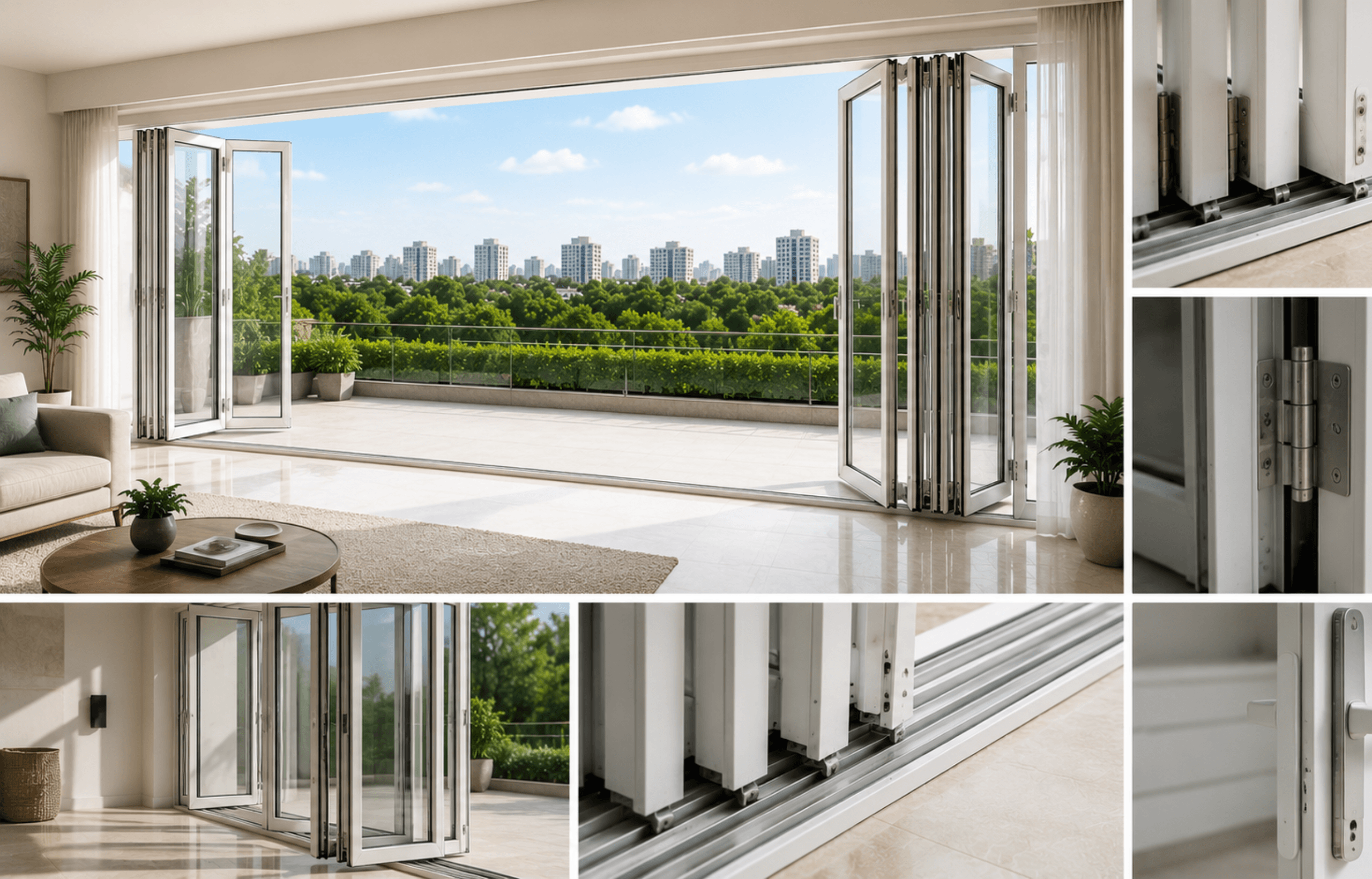 Top 10 uPVC Slide And Fold Door Ideas for Modern Homes in India
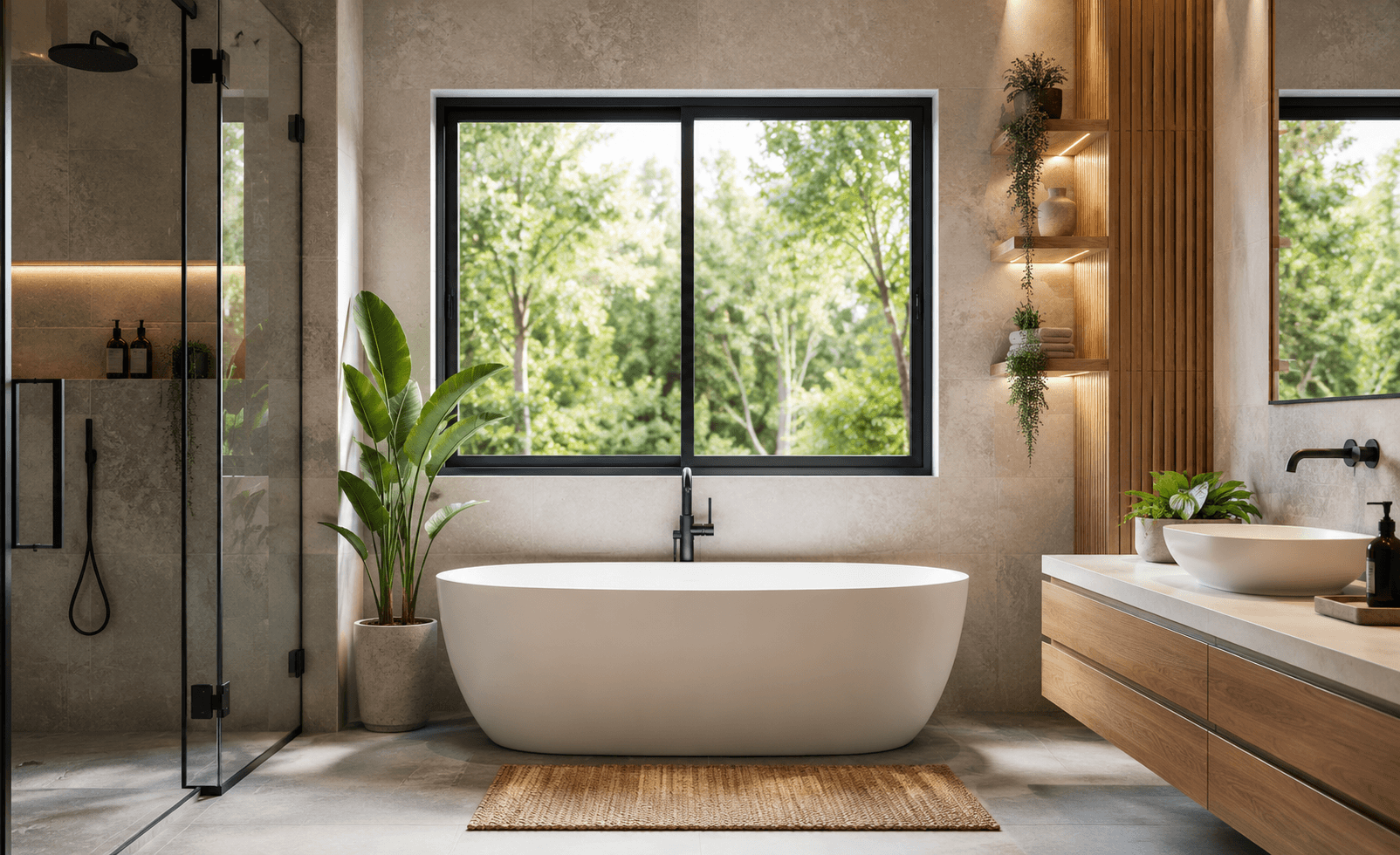 Top 10 Bathroom Window Design Ideas for Indian Homes
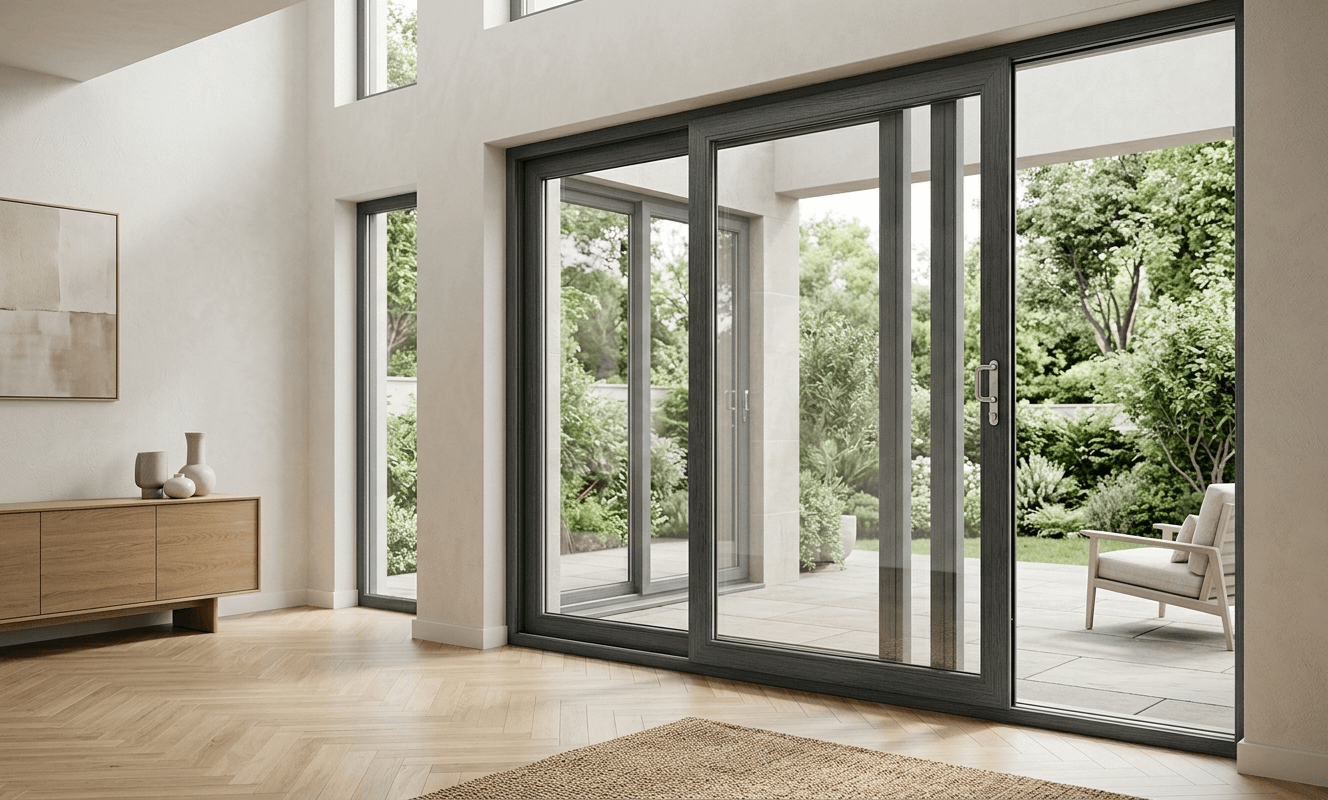 uPVC Doors: Simple Guide to Types, Benefits and Uses in Homes
 uPVC Window Designs for Homes: Types, Benefits and Buying Guide
 Best Interior Design Ideas to Match uPVC Windows and Doors
 English