
Why Sliding Doors Jam: Causes, Engineering Solutions for Smooth Operation
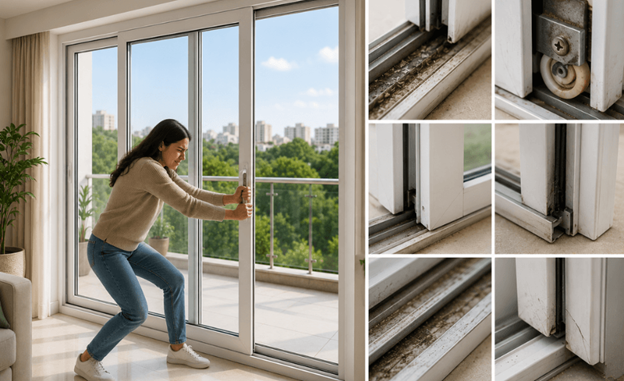
Sliding doors typically jam due to increased friction, worn rollers, poor weight distribution, misaligned tracks, frame movement, debris accumulation, or installation errors. When any one of these elements is compromised, the entire system can suffer, leading to operational issues that worsen over time.
Understanding the engineering behind smooth operation can help homeowners overcome sliding door problems.
Contents
- 1 What Causes Sliding Doors to Jam?
- 2 Why Homeowners Notice Smoothness First
- 3 The Engineering Behind Smooth Sliding Doors
- 4 Minimizing Sliding Friction: Science Behind Effortless Movement
- 5 Weight Distribution & Load Balancing
- 6 Why Structural Rigidity Matters
- 7 Track Design: The Secret Behind Smooth Sliding
- 8 Acoustic and Thermal Sealing Without Increasing Friction
- 9 Common Signs of Sliding Door Problems
- 10 Choosing a Sliding Door Built for Long-Term Performance
- 11 Takeaway: Conclusion
- 12 FAQs
- 12.1 Why do sliding doors become harder to open over time?
- 12.2 Can dirt in the track cause sliding doors to jam?
- 12.3 How long should sliding door rollers last?
- 12.4 What is the most common reason for sliding door failure?
- 12.5 Are lift-and-slide doors smoother than standard sliding doors?
- 12.6 Can a misaligned frame damage sliding door hardware?
What Causes Sliding Doors to Jam?
Sliding doors rarely become difficult to operate without reason. In most cases, operational issues develop gradually due to wear, environmental factors, installation errors, or inadequate engineering.
Sliding doors rarely become hard to work with. Mostly, operational problems arise as a result of wear and tear, climatic conditions, poor engineering, or installation mistakes.
Here are the reasons what causes sliding doors to jam:
Dirt and Debris Buildup
The buildup of dust, pet hair, leaves, and other material in the tracks is one of the most frequent causes of sliding door jamming.
- Over time, the track accumulates dust, dirt, and debris
- Resistance is produced by buildup, which stops the roller from moving smoothly
- During operation, the door may grind, stick, or halt in its tracks
Worn or Damaged Rollers
The door’s whole weight is supported by the roller’s underneath, which are constantly in use.
- Rollers may get corroded, broken, worn out, or seized
- The door drags due to an uneven distribution of weight
- Roller damage can result in derailment, sticking, or scraping
Misaligned Doors or Bent Tracks
Heavy use, unintentional hits, or sloppy adjustments can all lead to misalignment.
- Over time, roller adjustment screws may come loose
- The door may slump and tilt to one side.
- The door moves unevenly due to bent or broken rails
- The frame might come into contact with the track or nearby surfaces
Lack of Lubrication
For smooth sliding performance, proper lubrication is necessary.
- Friction and resistance are increased by dry roller bearings
- Operating the door gets more difficult and noisier
- Oil-based lubricants have the potential to draw dirt and exacerbate track accumulation
- For sliding door systems, silicone-based lubricants are typically recommended
Some problems can be fixed with maintenance, but others are caused by basic engineering or design flaws. The first step in choosing a sliding door system that performs consistently over time is to identify the underlying cause.
Why Homeowners Notice Smoothness First
When selecting a sliding door, the majority of homeowners do not consider roller quality or track design. Rather, they just open and close the door to test before purchasing.
First impressions are formed right away. While a door that seems heavy, jerky, or noisy can raise questions about its performance, a door that moves smoothly and silently conveys a sense of quality.
Many people are unaware that smooth operation is not a coincidence. From the layout of the rollers and tracks to the distribution of the door’s weight, it is the outcome of advanced engineering. Every part is crucial to ensure the door slides smoothly.
When these components function as a unit, the door is simple to use for many years. However, the door may become challenging to operate and eventually develop issues if any part is worn out, damaged, or improperly built.
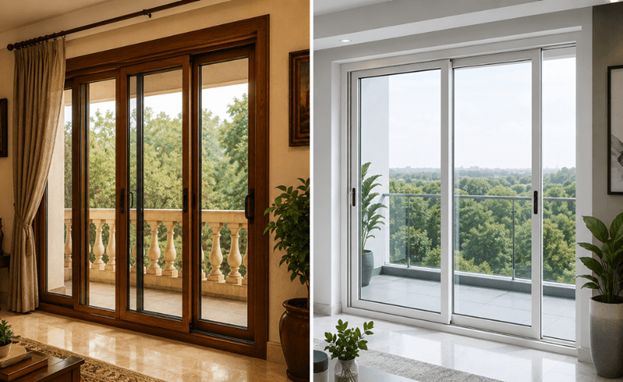
Also Read: Traditional vs uPVC Sliding Doors
The Engineering Behind Smooth Sliding Doors
From the simple methods that were in use decades ago, modern sliding doors have undergone great evolution. These days, the demands on hardware and structural elements are substantially higher due to the larger glass panels, thinner frames, and wider openings.
Precision Rollers
Sliding doors glide on specially made rollers that lessen friction and sustain the weight of the door rather than dragging across the floor.
- Made from sturdy materials like stainless steel, Delrin, or nylon
- Make it easier for the door to move smoothly and effortlessly
- Over time, sealed bearings reduce wear by keeping out dust and grime
Tracks and Guides
Tracks provide a stable path for the rollers, while guides keep the door aligned during operation.
- Made from robust extruded aluminum
- Avoid distortion or bending while under stress
- Prevent the door from veering off course or swaying
Even Weight Distribution
A perfect distribution of weight is important for a smooth operation, particularly when the door features large glass panels
● Distributes the door’s weight uniformly across the system
● Reduces the strain on tracks and rollers
● Better hardware stability and life span
Lift-and-Slide Technology
This is commonly seen in large patio and architectural doors to make heavy panels easy to operate.
- When the handle is turned, the door is raised slightly
- Makes big panels to slide with less effort
- When closed, it forms a strong, weatherproof seal
Soft-Close Dampers
Soft-close systems improve comfort and safety by controlling the door’s movement near the end of its travel.
- Slows down the door before it reaches the frame
- Avoid abrupt hits and slamming
- Assist with the door’s tight, silent closure
Minimizing Sliding Friction: Science Behind Effortless Movement
Even though the track appears smooth, microscopic surface imperfections cause resistance as the door moves. This eventually causes the door to seem less smooth and heavier.
Precision rollers are used in modern sliding doors to address the issues by converting sliding friction into rolling friction.
To handle hefty door panels, these rollers are made of stainless steel or high-strength engineered polymers.
Sealed ball bearings, which lower resistance and shield the mechanism from wear, moisture, and dust, are another feature of premium systems.
By slightly raising the door panel away from the seals when the handle is turned, advanced lift-and-slide systems enhance the performance. This lowers pressure and makes it possible for even big glass doors to move smoothly.
Weight Distribution & Load Balancing
Panel weights keep rising as more apertures and floor-to-ceiling windows are included in modern construction.
The weight of a large sliding door might reach several hundred kilograms. Operational issues also arise if this weight is not dispersed equally throughout the hardware system.
Inadequate weight distribution may lead to:
- Door sagging
- Inconsistent roller wear
- An increase in friction
- Track damage
- Difficult operation
Manufacturers employ multi-point carriage systems, which spread loads over several rollers instead of concentrating weight in one place, to avoid these problems. Large panels can move easily because of the balanced technique that lessens the strain on individual parts.
Why Structural Rigidity Matters
Even the highest-quality rollers cannot compensate for a frame that flexes under load.
Frame stability is a crucial factor because the track system depends on alignment. Any movement or deformation within the frame will impact the relationship between rollers and tracks.
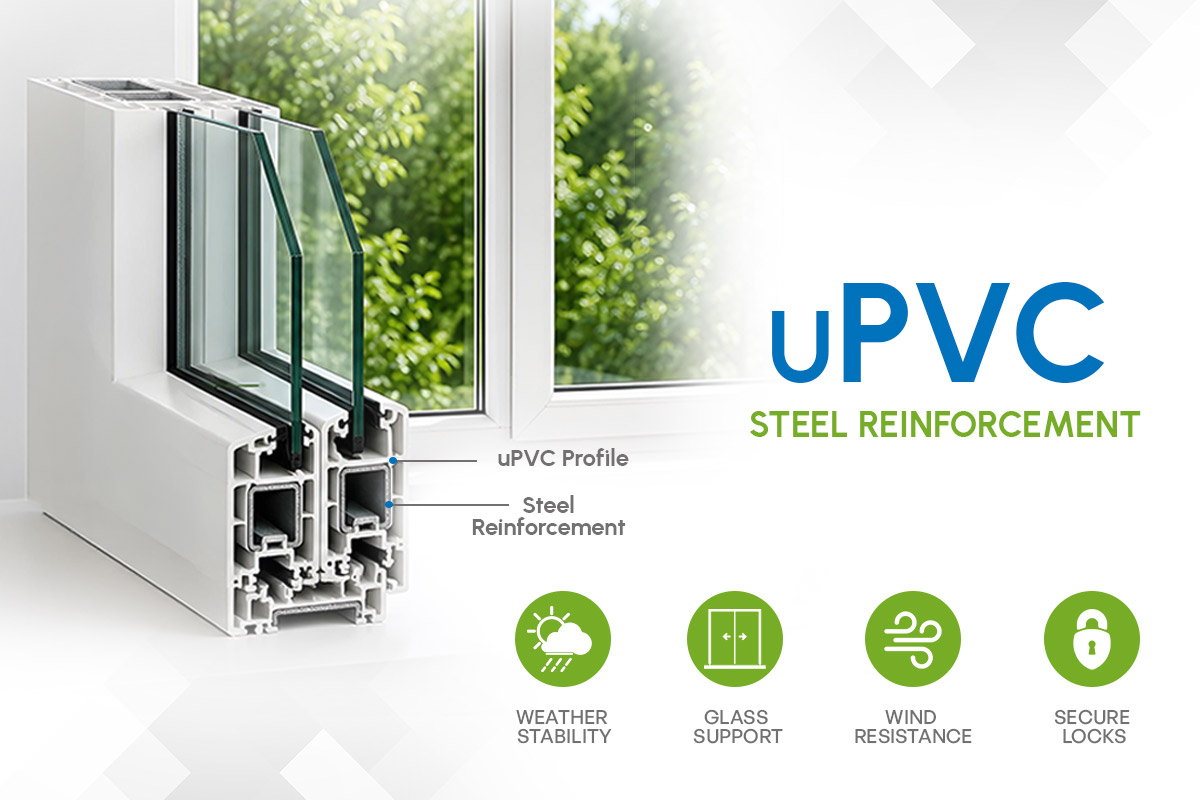
Reinforced frames help maintain dimensional stability and support larger glass panels. Modern aluminum systems utilize high-strength extruded sections capable of carrying loads without compromising slim sightlines.
Some premium doors also integrate thermal break technology. These insulating barriers reduce the transfer of heat and help maintain frame stability.
The result is improved operational consistency throughout changing weather conditions.
Track Design: The Secret Behind Smooth Sliding
The track is the base of every sliding door system because it bears the door’s weight and guides its movement. A good track keeps the door moving smoothly for several years with less effort and less maintenance.
But when tracks are damaged or poorly designed, these problems arise:
- Jerky movement
Uneven, worn, or dirty tracks stop rollers from moving freely, making the door feel heavy or difficult to open. - Additional noise
Friction and vibration can create squeaking, grinding, or rattling sounds during operation. - Rapid wear and tear
Extra stress on rollers, bearings, and hardware causes parts to wear out sooner. - Door misalignment
Bent or unstable tracks can shift the door out of position. This creates uneven gaps or causes it to rub against the frame. - Higher maintenance
Poor track systems need frequent cleaning, adjustments, repairs, and replacement of parts.
A high-quality track system reduces friction, improves durability, and ensures smooth, stable performance of the sliding door.
Acoustic and Thermal Sealing Without Increasing Friction
Engineers face difficulty in balancing weather performance with operational smoothness.
A tightly sealed door improves thermal insulation, weather resistance, and acoustic performance. But excessive seal compression can increase friction, making operation more difficult.
Modern systems solve these issues through the latest sealing technologies, including drop seals and intelligently designed gasket systems, which engage only when the door is closed.
This helps homeowners to enjoy strong weather protection and ease of operation.
Soft-Close Systems and Safety
Modern sliding doors are increasingly equipped with soft-close technology designed to improve comfort and safety.
These systems use dampers that engage during the final stages of travel. Rather than allowing the panel to slam shut, the mechanism slows movement and gently guides the door into its final position.
The benefits include:
- Reduced impact loads
- Less hardware wear
- Quieter operation
- Improved child safety
- Enhanced user experience
While often viewed as a convenience feature, soft-close technology also contributes to the long-term durability of the system.
Installation Precision
Even a perfectly engineered sliding door can experience problems if it is not installed properly. Also, minor misalignment during installation can affect performance significantly.
Installation Issue | Potential Result |
Uneven levels | Jerky movement |
Misaligned tracks | Increased friction |
Improper frame positioning | Difficult operation |
Poor sealing | Reduced weather performance |
Common Signs of Sliding Door Problems
Homeowners should watch for warning signs that indicate existing issues with the sliding door system.
- Increased effort during operation: If the door feels heavier or requires extra force to open and close, it may indicate worn rollers or track obstructions.
- Grinding noises: Unusual grinding, scraping, or squeaking sounds often suggest dirt buildup in the track, damaged rollers, or insufficient lubrication.
- Uneven movement: A door that jerks, moves, or sticks inconsistently may be suffering from track damage, roller wear, or poor weight distribution.
- Visible track wear: Dents, bends, cracks, or wear on the track can affect smooth operation and lead to long-term performance issues.
- Door sagging: If the door appears tilted or uneven, the rollers may be damaged or the door may have shifted out of alignment.
- Difficulty locking: When a sliding door becomes difficult to lock or unlock, it is often a sign of misalignment between the door panel and the locking mechanism.
Problem | Likely Cause |
Door feels heavy | Worn rollers or excessive friction |
Jerky movement | Track misalignment |
Scraping noise | Debris build-up or damaged rollers |
Door sagging | Inconsistent weight distribution |
Difficult locking | Frame movement or poor alignment |
Air or water leakage | Worn seals or poor installation |
Choosing a Sliding Door Built for Long-Term Performance
A sliding door must operate smoothly years after installation, not just during the showroom demonstration.
When evaluating systems, homeowners should consider:
- Roller quality
- Track engineering
- Frame reinforcement
- Weight-bearing capacity
- Weather sealing technology
- Installation expertise
- Product testing standards
All these factors influence how the system performs throughout its lifespan.
Takeaway: Conclusion
Smooth sliding is the product of meticulous engineering and not a luxury feature. Every element affects how well a sliding door functions, from weight distribution and friction control to structural rigidity and installation accuracy.
Aparna Venster sliding doors offer excellent performance even after years of use, so if you’re searching for a simple sliding system for your house, this may be the answer.
FAQs
Why do sliding doors become harder to open over time?
Sliding doors may become difficult to operate due to worn rollers, track contamination, misalignment, frame movement, or inadequate maintenance.
Can dirt in the track cause sliding doors to jam?
Yes, because the rollers crush the dust while the doors are sliding, dust, dirt, and tiny particles can block the sliding doors. Use a hoover to remove the dust, or use a gentle cloth to clean it.
How long should sliding door rollers last?
The rollers last anywhere between 5 and 10 years, but quality heavy-duty rollers can increase the lifespan to 15+ years. Poor-quality hardware can last 3 to 5 years.
What is the most common reason for sliding door failure?
The wheels bear the entire weight of the door and can break or flatten. Also worn rollers are the most frequent failure. Poor maintenance, worn rollers, track damage, and alignment problems during installation are a few other challenges.
Are lift-and-slide doors smoother than standard sliding doors?
Yes, because lift-and-slide systems are made to operate with less friction, they are indeed smoother than regular sliding doors. However, compared to lift-and-slide doors, sliding doors are less expensive and require less space.
Can a misaligned frame damage sliding door hardware?
Yes, a misalignment can damage the hardware by placing additional stress on rollers, tracks, and locking mechanisms. This leads to damage and compromises performance.
 English