
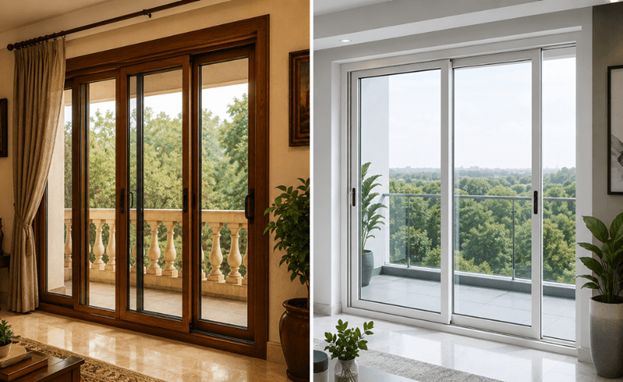
Traditional vs uPVC Sliding Doors: Features, Benefits & Comparison
Earlier, people chose sliding doors based only on appearance and price. But this approach is changing slowly. Today, doors are expected to offer indoor comfort, security, low maintenance, reduce noise, and protect from the weather.
This shift is easily noticeable in cities such as Hyderabad, Bengaluru, Chennai, and Pune, where apartments often feature large balcony openings and floor-to-ceiling glass.
A door that works well initially may fail after a few years. That is why many homeowners are comparing traditional doors with newer uPVC systems before making a decision. In this section, we will see what traditional and new-generation sliding doors are, types of modern uPVC sliding doors , key differences, their maintenance, and comparison.
Contents
- 1 What Are Traditional Sliding Doors?
- 2 What Are New-Generation uPVC Sliding Doors?
- 3 uPVC Sliding Doors with Grill
- 4 uPVC Sliding Doors with Mesh
- 5 Traditional vs uPVC Sliding Doors: Key Differences at a Glance
- 6 Material Comparison: Strength, Durability & Weather Resistance
- 7 Thermal Insulation & Energy Efficiency Comparison
- 8 Sound Insulation: Which Sliding Door Performs Better?
- 9 Maintenance & Lifespan Comparison
- 10 Design & Aesthetic Flexibility
- 11 Security Features Comparison
- 12 Cost Comparison: Initial vs Long-Term Value
- 13 Environmental Impact & Sustainability Comparison
- 14 uPVC Sliding Door Applications
- 15 How to Choose Between Traditional and uPVC Sliding Doors
- 16 Why uPVC Sliding Doors are Becoming the Preferred Choice
- 17 Frequently Asked Questions
What Are Traditional Sliding Doors?
Traditional sliding doors have been part of Indian homes for decades. They are made with wood or conventional sliding systems, which priorities only functionality over performance.
They are still used in farmhouses or heritage-style villas because they offer a warm look. The appearance and performance of wood are prone to humidity, rain, and temperature. A door that slides smoothly when it was new may need adjustments, polishing, or repairs after years of exposure to the weather. They are a good choice if you want a great look, have time, and can spend money regularly.
What Are New-Generation uPVC Sliding Doors?
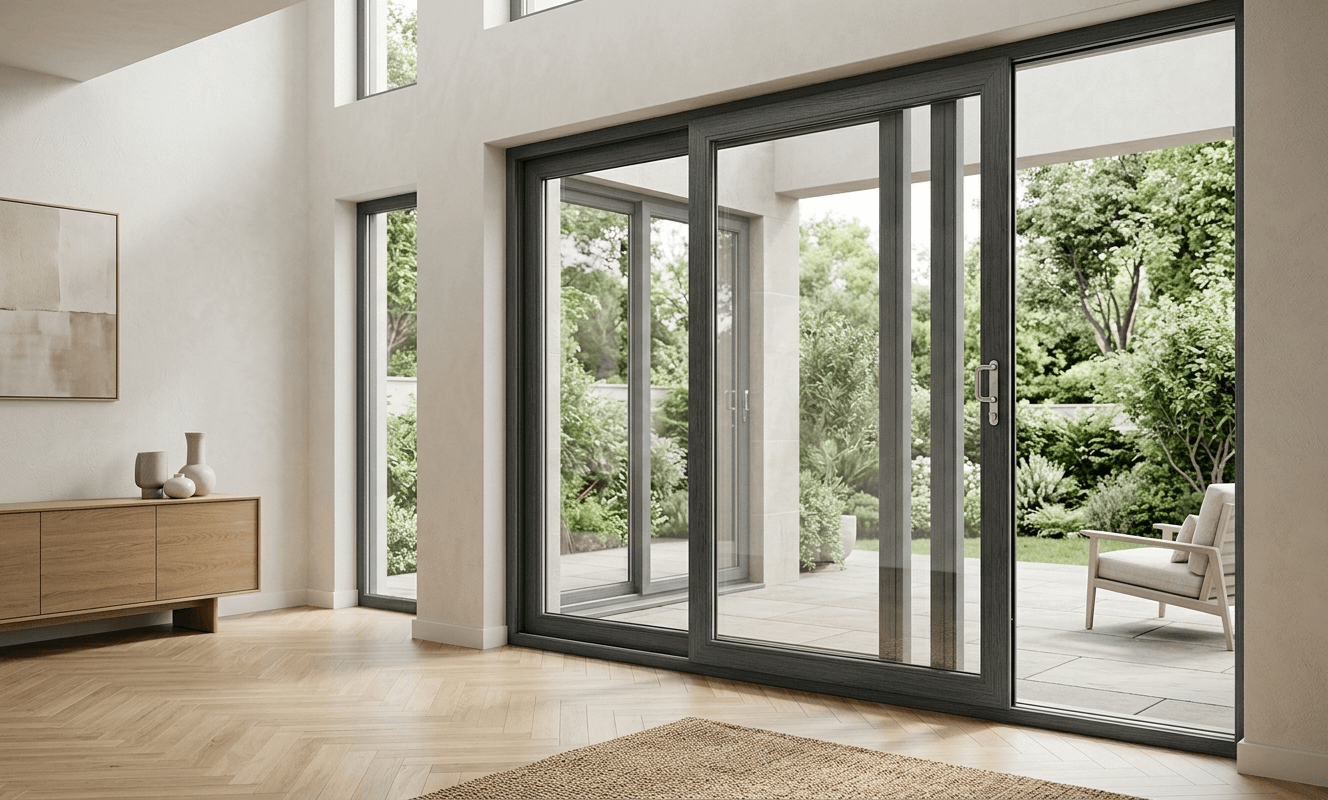
In modern uPVC sliding doors, many believe the only difference is the glass, the color, or the frame finish. But what actually matters is the experience.
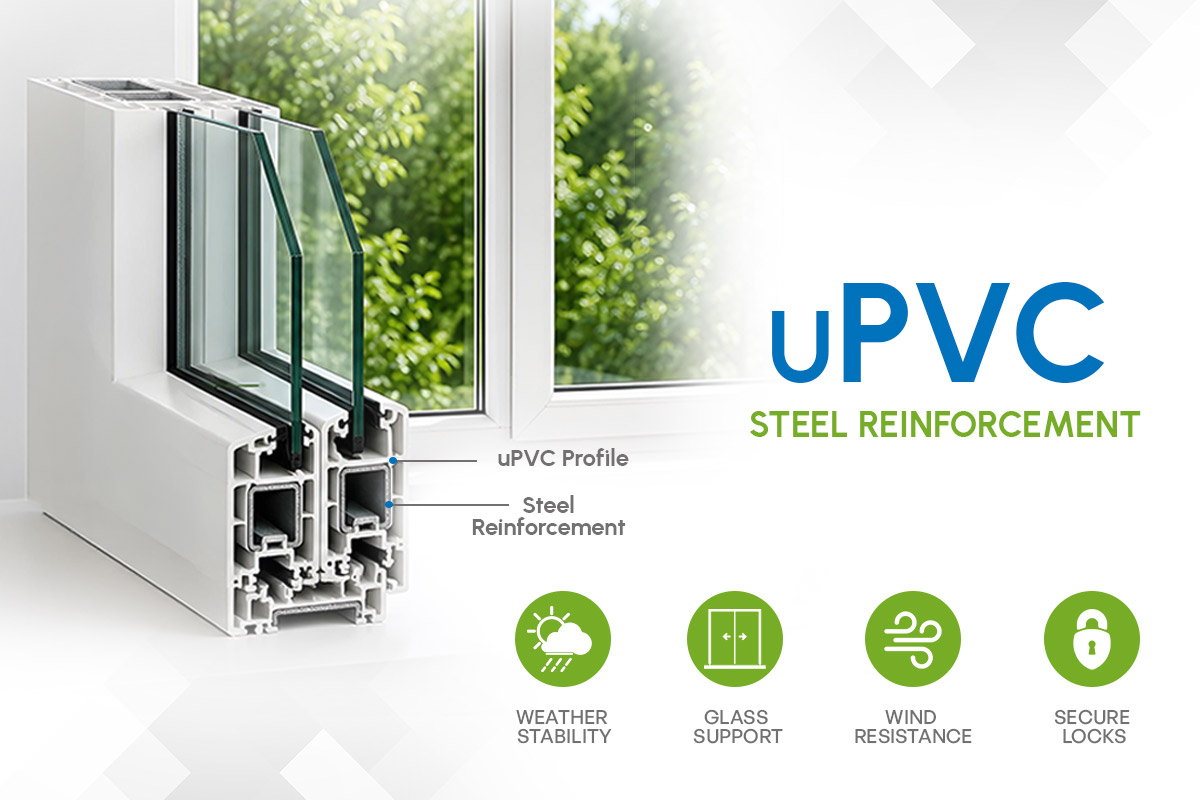
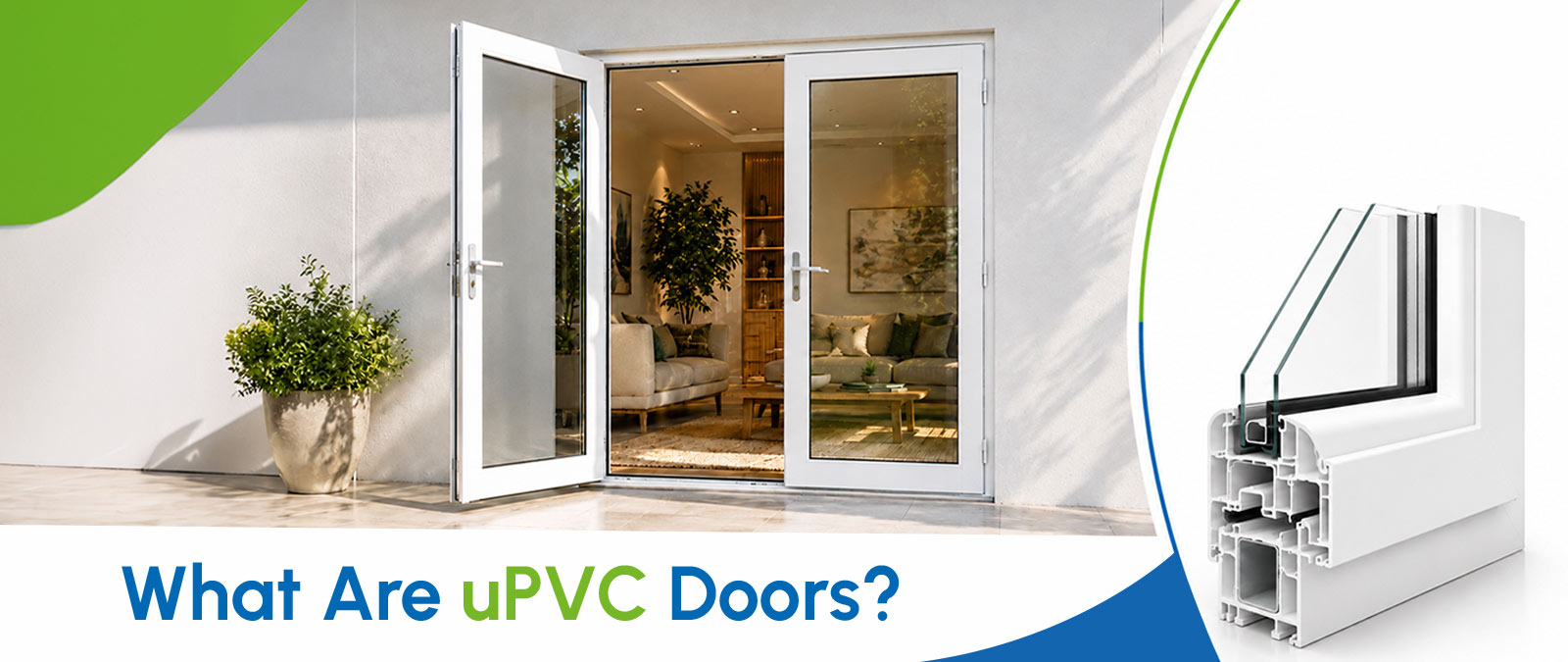
Modern uPVC sliding doors use multi-chamber profiles to help slow down heat transfer. When combined with double glazing, weather seals, and improved hardware, the performance can be further improved.
These modern systems can be customized for Indian weather conditions. Two configurations have become especially popular.
uPVC Sliding Doors with Grill
In ground-floor homes, and independent houses, security is a major concern for ground-floor homes, balconies, and independent houses.
Earlier, homeowners used to install a separate grill after the door was fitted. But uPVC sliding doors come with an integrated grill into the system itself.
uPVC Sliding Doors with Mesh
uPVC sliding doors with mesh allow ventilation without allowing mosquitoes and insects indoors. As the mesh is integrated into the system, it becomes easier to operate it, as it allows you to slide the mesh.
Venster allows homeowners to mix and match different profile styles, colors, security grills, and mesh systems to fit any room.
Traditional vs uPVC Sliding Doors: Key Differences at a Glance
Feature | Traditional Sliding Doors | uPVC Sliding Doors |
Frame Material | Wood and conventional systems | Multi-chamber uPVC profiles |
Heat Insulation | Moderate | High |
Noise Reduction | Basic | 30–42 dB depending on glass specification |
Maintenance | Regular upkeep required | Minimal maintenance |
Weather Resistance | Varies by material | Strong resistance to rain, humidity and sunlight |
Security | Basic locking systems | Multi-point locking systems |
Lifespan | 10–20 years* | 25–40 years |
Mesh Option | Separate installation | Integrated option available |
Grill Option | Separate installation | Integrated option available |
Long-Term Value | Moderate | Higher |
Material Comparison: Strength, Durability & Weather Resistance
In the long run, the choice of material becomes an important part because a new system rarely shows its weaknesses. Most issues appear only after usage and exposure to weather elements.
Wood remains attractive because of its natural appearance and its ability to enhance the overall look of a property. But t it requires regular care. Ignoring maintenance for long periods often affects both appearance and functionality.
uPVC approaches these problems differently. It does not absorb moisture and does not require repainting.
Quality profiles are manufactured with UV stabilizers like Titanium Dioxide (TiO₂) and Calcium (Calcium-Zinc stabilizers) to prevent yellowing or discoloration.
Thermal Insulation & Energy Efficiency Comparison
Most homeowners do not think about insulation until they experience the consequences of poor insulation.
A west-facing room may feel comfortable during monsoons and winter, but in summer, you may experience heat. The reason for this is that the sun’s rays directly hit west-facing windows and doors in the afternoon. Sliding doors offer basic insulation, as they aren’t designed to block heat. A modern uPVC sliding system features a multi-chamber profile to trap air and block heat. Double glazing and Low-E glass add a layer of heat protection.
For households that depend a lot on air conditioning, better insulation will cut down electricity costs.
Also Read: How uPVC Sliding Doors Can Upgrade the Look of Your Home
Sound Insulation: Which Sliding Door Performs Better?
External noise from traffic, ongoing construction, and other sources causes a lot of disturbance. A traditional sliding door can cut down that size to some extent. Modern sliding doors feature double or triple-glazed units that minimize sound offerings peace of mind. The type of glass configuration decides how much sound can be reduced (up to 40 dB).
Maintenance & Lifespan Comparison
Traditional doors need regular maintenance, repainting, and sanding. But modern uPVC sliding systems need only basic maintenance. They can last 25 to 40 years easily with less maintenance, making it a highly cost-effective choice.
Design & Aesthetic Flexibility
Traditional sliding doors continue to attract homeowners who like natural and classic design styles. They are good for villas, farmhouses, and homes with traditional interiors.
But uPVC has also changed a lot over the years. They come in many different color options and can mimic natural wood. Venster offers nature-inspired colors like golden oak, rustic oak, dark oak, and mahogany. Also, sliding doors can accommodate large glass panels, improve the aesthetics and make rooms brighter.
Security Features Comparison
Traditional sliding doors rely on basic locking systems and may be suitable only for some applications. Modern uPVC systems come with multi-point locking mechanisms, locking the window at multiple points for a secure closure. Toughened and laminated glass can enhance safety.
Cost Comparison: Initial vs Long-Term Value
Many buy a traditional sliding door based only on the initial price. But in the long run, you have to spend more from your pockets on maintenance like repairs and polishing.
uPVC sliding doors may cost a lot initially, but they are worth the investment. Here, let’s see why they are the preferred choice.
Factor | Traditional Sliding Doors | uPVC Sliding Doors |
Initial Cost | Lower | Higher |
Maintenance Cost | Higher over time | Lower |
Repairs | More frequent | Less frequent |
Energy Efficiency | Moderate | Better |
Expected Service Life | 10–20 years | 25–40 years |
Long-Term Value | Moderate | Higher |
Environmental Impact & Sustainability Comparison
Wood rots, warps, and attracts termites, and to protect it from decaying, it must be treated with paints and chemicals. This releases many harmful gases into your indoor air.
On the other hand, quality uPVC profiles are recyclable and are completely chemical-free. Sliding doors from Aparna Venster are 100 percent lead-free and are compliant with RoHS (Restriction of Hazardous Substances) directives.
uPVC Sliding Door Applications
1. Classic Homes (Wood)
Choose natural wood doors to complement traditional architecture where aesthetic charm matters more than maintenance.
- Best for heritage villas and farmhouses.
- Looks beautiful but requires high maintenance.
2. Modern Apartments (uPVC)
Select high-performance uPVC doors to improve energy efficiency, noise reduction, and security in busy urban spaces.
- Best for daily convenience and long-term use.
- Blocks noise, insulates well, and needs zero maintenance.
3. Balconies & High Rises (uPVC)
Go with durable uPVC systems that can withstand severe weather, extreme wind loads, and heavy monsoon rains.
- Best for resisting heavy rain, sun, and high winds.
- Can add mesh for airflow or grills for safety.
4. Low-Traffic Areas (Traditional)
Use simple, traditional sliding doors for internal sections where advanced weather insulation is unnecessary.
- Best for indoor room dividers and utility spaces.
- Good for spots that do not need advanced weatherproofing.
Also Read: Sliding uPVC windows and doors for home improvement
How to Choose Between Traditional and uPVC Sliding Doors
Before choosing one, think about the room rather than the door itself.
To pick the right door easily, consider five simple parameters:
- Check if the area faces harsh sun or heavy rain
- Decide if you need to block loud outside traffic noise
- Choose between low-maintenance materials or high-care wood
- Look at your need for extra security locks or safety grills
- Decide if you want a short-term fix or a twenty-year investment
Why uPVC Sliding Doors are Becoming the Preferred Choice
Traditional doors fail because they cannot block out modern heat, city noise, or heavy pollution. So, high-performance uPVC sliding doors are in demand as they handle heat, provide soundproofing, offer high security, weather resistance, and pest protection. Venster sliding door profiles undergo strict NABL-certified laboratory tests to ensure they survive extreme weather.
Frequently Asked Questions
Q1. Are uPVC sliding doors better than traditional doors?
Yes, they outperform traditional doors in lifespan, space savings, and weather sealing. Also, the high-compression seal stops air leaks and dirt. They are also termit-proof because they are synthetic and lack cellulose.
Q2. How long do uPVC sliding doors last?
A premium uPVC door can last 25 to 40 years because its PVC-U base helps prevent sagging, titanium dioxide protects against UV damage, acrylic modifiers improve impact resistance, and calcium-zinc stabilizers help maintain the strength and density of the frame over time.
Q3. Are uPVC sliding doors suitable for Indian weather?
Yes. They are specifically engineered to withstand India’s coastal monsoons and intense summer heat. The sliding door frames are made of TiO₂, drainage systems, and corrosion immunity.
 English