
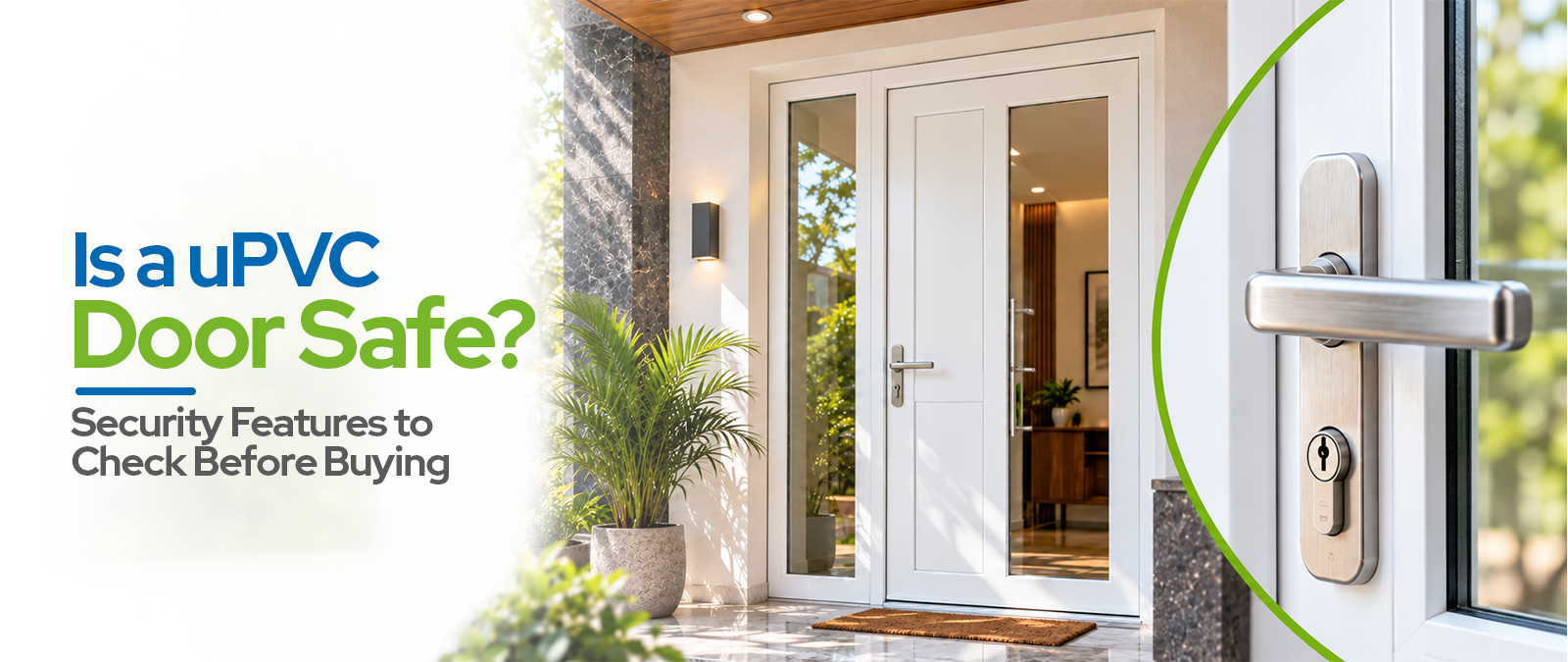
Is a uPVC Door Safe for Your Home? Locks and Features to Check Before Ordering
Yes, a uPVC door can be safe for your home if it has a good locking system, steel reinforcement, suitable glass and proper installation. Security depends on the entire door, not just the uPVC profile.
If you are planning to buy a uPVC door for your home in India, this guide shows what to check, what to ask the dealer, and which things you should not ignore.
Contents
Are uPVC Doors Really Secure?
uPVC (unplasticised polyvinyl chloride) doors resist rust, termites, and moisture, which makes them popular in India. But the uPVC profile alone does not decide how secure the door is. The reinforcement, locks, hinges, and glass also matter.
The security of the door depends on how all these parts work together.
What Makes a uPVC Door Secure?
A uPVC door is more secure when its main parts work well together. The locking system, steel reinforcement, hinges, glass, and installation all have a role in the overall security of the door.
When buying a uPVC door, do not check only the profile. Ask about the complete door system and the specifications of the hardware and glass being used.
6 Security Features to Check Before Ordering
1. Multipoint Locking System
A multipoint locking system locks the door at more than one position along its height. Depending on the hardware, the locking points can be placed at different positions on the door frame and work together when you operate the handle or key.
Before ordering, ask the dealer how many locking points the door has and which locking system they use.
2. Steel Reinforcement Inside the Frame
Some uPVC door profiles use galvanised steel reinforcement inside the frame and sash chambers. This helps make the door more rigid and gives screws and hinges a stronger fixing point.
Ask the dealer about the steel reinforcement used in the door, including its thickness and whether it runs through the full sash. Reputed manufacturers should be able to provide this information.
3. Strong Hinges and Anti-Lift Protection
The hinges are also important when checking the security of a door. Check the number and type of hinges used and ask whether they are adjustable.
You can also ask whether hinge bolts or security pins are provided to help keep the door in place.
For sliding doors, ask whether anti-lift provisions are provided to prevent the panel from being lifted off its track.
4. Toughened or Laminated Glass
Glass in or beside the door is another point to check. Toughened glass is stronger than normal glass and breaks into small pieces when damaged.
Laminated glass holds together when cracked because of the interlayer between the glass sheets.
For doors with large glass panels, ask the dealer whether toughened or laminated glass is being used and check its thickness. Also ask how the glass is fixed in the frame and whether the glazing beads are fixed from the inside.
5. A Recognised Security Rating
If the door system has been tested to a recognised security standard, ask the dealer for the details and supporting test documents.
Do not depend only on claims such as high security. Ask what testing has been carried out and whether the manufacturer can provide the relevant documents.
6. Professional Installation
A good door can still have security problems if it is not installed properly. Gaps, wrong screws or poor packing can affect the frame and locking system.
Choose an installer who fixes the frame properly to the wall and checks the alignment. The locking points should also be checked after installation to make sure they engage properly.
Ask the dealer what is covered under the installation warranty.
What to Check Before Ordering a uPVC Door
Before ordering a uPVC door, check these points with the dealer:
- Locking system: Check how many locking points are provided and what type of locking system is used.
- Steel reinforcement: Ask about the reinforcement used inside the frame and sash, including its thickness.
- Hinges: Check the number and type of hinges and whether they can be adjusted.
- Glass: Confirm whether the door uses toughened or laminated glass and check the glass thickness.
- Installation: Ask how the frame will be fixed to the wall and whether the installer will check the alignment and locking points.
- Testing: If the door system has been tested to an applicable standard, ask for the test details or supporting documents.
- Warranty: Confirm what is covered under the product and installation warranty.
These details can help you compare different uPVC door options before placing an order.
Questions to Ask the Dealer
- How many locking points does this door have?
- What type of locking system is used?
- What is the steel reinforcement thickness?
- Does the reinforcement run through the full sash?
- Which glass is used, and what is its thickness?
- How many hinges are provided?
- What type of hinges are used?
- Has the system been tested to any applicable security standard?
- Who will install the door?
- What does the warranty cover?
If a seller cannot answer these clearly, ask for the details in writing before placing the order.
Everyday Habits That Keep Your Door Safe
- Close the door properly and lock it whenever you leave the house.
- Lift the handle fully and lock with the key as recommended for the locking system. Some multipoint locks need the handle to be lifted fully before they engage.
- Replace worn locks, hinges and other hardware when required.
- Keep spare keys only with trusted people.
- Fit a door chain or limiter for visitors if required.
- Service hinges, rollers and locks once a year, especially after monsoon humidity.
Conclusion:
A uPVC door can be a safe and low-maintenance choice for your home when you buy based on its features and overall construction, rather than only its looks and price.
Check the locking system, reinforcement, hinges, glass, and installation. Also ask the dealer for the relevant specifications before ordering.
A few simple questions before buying can help you understand what you are getting and avoid problems later.
Planning to order a uPVC door for your home or project? Get in touch with Aparna Venster for a written specification covering the locking points, steel thickness, hinges, glass, and installation before you pay. Aparna Venster offers doors in various options like sliding, casement, and slide-and-fold doors.
Frequently Asked Questions
Are uPVC doors safer than wooden doors?
They can be, if they have steel reinforcement and a suitable locking system. Solid wood can also be strong, but it can warp, swell or be affected by termites. This can affect the door and its hardware over time.
Can a uPVC door be broken into easily?
It depends on the door. The locking system, frame reinforcement, glass, hinges and installation all make a difference. A properly specified and installed door can provide better security than one with basic hardware.
Do uPVC doors need steel reinforcement?
Steel reinforcement gives the frame more rigidity and provides a stronger fixing point for the hardware. Ask the dealer what type of reinforcement is used in the door you are buying.
Can I upgrade the lock on an existing uPVC door?
In some cases, the locking hardware can be upgraded. It depends on the existing door and hardware. Check with the manufacturer or installer before replacing any locking parts.
How long does a uPVC door last?
The life of a uPVC door depends on the profile, hardware, glass, installation, weather conditions and maintenance. Some hardware parts may need servicing or replacement earlier than the door profile.
What should I check when buying a uPVC door?
Check the locking system, number of locking points, steel reinforcement, hinges, glass, installation and warranty. Ask the dealer for the specifications before placing the order.
Related posts:
 uPVC Window Security Features: How Safe Are Your Windows, Really?
 Cost of a uPVC Window: What Affects the Price and What to Check
 What are uPVC Fixed Windows? Features and Benefits
 Traditional vs uPVC Sliding Doors: Features, Benefits & Comparison
 uPVC Doors and Windows in Bengaluru: Types, Features and Buying Guide
 English