
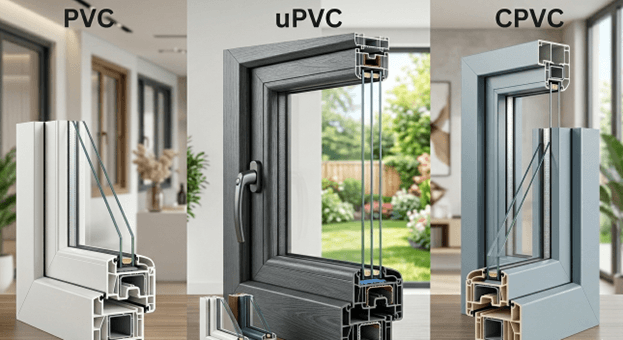
PVC vs uPVC vs CPVC: Key Differences Explained
Choosing the right material for your home is important when building a new home or when you go for renovation. We tend to make decisions in haste when it comes to choosing the material and regret it later. Homeowners don’t consider important factors like weather conditions, ease of maintenance, and purpose, among others, and give preference only to the appearance. There are different materials available in the market, like wood, PVC, uPVC, steel, and CPVC, but what confuses people the most is PVC, uPVC, and CPVC. The reason is that the names of these materials sound similar.
So it becomes necessary to understand PVC, uPVC, and CPVC in detail to make the right decision.
Contents
What is PVC?
PVC (Polyvinyl Chloride) is a common plastic material. It is flexible in nature because it can be added to some chemicals. Due to this, it is mostly used in wires, cables, and basic pipes. It is specifically used for drainage or cold water use. It is lightweight and also low in cost. That is why it is widely used. However, it is not very strong and is not suitable for heavy or long-term usage.
What is uPVC?
uPVC (Unplasticized Polyvinyl Chloride) is a stronger version of PVC. It is deprived of those soft chemicals, so it is rigid. Because of its durability, it can be used where strength is needed. Likewise, it doesn’t need much maintenance, painting, or polishing. These features make it a practical material for long-term use. uPVC material can also resist heat, rain, and moisture when compared to PVC material.
What is CPVC?
CPVC (Chlorinated Polyvinyl Chloride) is a modified type of PVC. It is made to handle higher temperatures. It is mostly used in plumbing, particularly for hot water pipes. This heat-bearing resistance of CPVC is the reason why they are a preferred choice in demanding requirements. They are mostly restricted to piping systems only
PVC vs uPVC vs CPVC
PVC vs UPVC vs CPVC, the main difference is simple. Strength, flexibility, and heat-handling capabilities.
|
Feature |
PVC | uPVC |
CPVC |
| Flexibility | Flexible (soft) | Rigid (hard) | Rigid (strong) |
| Strength | Basic | Strong | Very strong |
| Heat Resistance | Low | Medium | High |
| Water Use | Drainage, cold water | Cold water use | Hot & cold water |
| Durability | Good | Better | Best |
| Maintenance | Low | Very low | Low |
| Cost | Low | Low to medium | Medium to high |
In simple terms, PVC is soft and flexible, and it is used where bending is needed. uPVC is hard and strong. It is preferred where a long life is needed. CPVC is strong and heat-resistant and is used mainly for hot water.
Which One To Choose: PVC, uPVC, or CPVC?
There is no right answer, and the choice depends on your use.
- You may prefer to go with PVC if you need a low-cost option, for simple use like drainage, and where flexibility is required
- You can pick uPVC if you need something strong with low maintenance, or don’t want much maintenance
- You may choose CPVC if you require pipes for hot water or where heat resistance is important.
Why is uPVC Gaining Popularity in India?
In recent years, uPVC has become more common in modern constructions in India. You can observe the same in places where construction activity is in swing.
People today are preferring materials that need minimal maintenance due to their busy lifestyles. Also, the Indian weather takes a toll on the material as it is subjected to rain, cold, and humidity.
When these factors are taken into consideration, uPVC performs better. This is one of the reasons why it is in demand these days. It also offers long-term value to the end user. Because if they are installed properly, they do not need much attention for years.
Where to Get Quality uPVC Material?
If you are planning to use uPVC, choosing the right brand matters. Not all products are the same. Brands like Aparna Venster offer highly durable uPVC windows and doors. Known for being eco-friendly, Venster offers lead-free uPVC windows and doors with advanced multi-point locking systems for security. Homeowners can choose different colour options. Venster uses specialised German technology and machinery from WEGOMA to achieve high precision and reliability.
Takeaway
Many times, people don’t think much while choosing materials. It feels like a small decision at that time. With the passage of time, the issues are likely to show up. If the quality is good, things just work fine without any issues. But if not, small problems keep coming again and again. That is why it is important to prefer trusted options like Aparna Venster.
FAQs
What are the full forms of PVC, uPVC, and CPVC?
- PVC: Polyvinyl Chloride
- uPVC: Unplasticized Polyvinyl Chloride
- CPVC: Chlorinated Polyvinyl Chloride
What is the price difference between PVC, uPVC, and CPVC?
PVC is a budget-friendly option. uPVC is a bit more expensive due to its added durability. CPVC is the highest in cost because of its specialised heat resistance.
Why does CPVC cost more than uPVC?
CPVC costs more than uPVC because it handles intense heat. It has special chemicals that stops it from melting.
PVC vs. uPVC: Which is the better choice?
uPVC is better for strong, rigid projects like window frames or tough pipes. PVC is better for flexible uses that do not require high strength.
Can I use uPVC for hot water lines?
No, uPVC is best suited for cold water. CPVC is the right material for hot water lines.



 English