
What Is a uPVC Ventilator? Benefits, Types and Uses Explained
In many homes, ventilation isn’t properly planned, but it plays an important role in daily comfort. A uPVC ventilator helps keep air moving inside the house, without affecting privacy.
In this guide, we will understand what uPVC ventilators are, their benefits, types, and usage in detail.
Contents
- 1 What Is a uPVC Ventilator?
- 2 Why uPVC Ventilators Are Gaining Popularity in Modern Homes
- 3 Key Benefits of uPVC Ventilators
- 4 Types of uPVC Ventilators Available
- 5 Ideal Places to Install uPVC Ventilators in Your Home
- 6 Design Options and Customization in uPVC Ventilators
- 7 How uPVC Ventilators Airflow, Indoor Comfort
- 8 Installation Process of uPVC Ventilators
- 9 Why Professional Installation Matters
- 10 Maintenance Tips for Long-Lasting Performance
- 11 Why Choose Aparna Venster for uPVC Ventilators
- 12 Cost of uPVC Ventilators in India
- 13 Common Mistakes to Avoid When Choosing a uPVC Ventilator
- 14 Summary
- 15 FAQs
What Is a uPVC Ventilator?
A uPVC ventilator is a tiny aperture that resembles a window and is used for better airflow.. It is usually placed in utility rooms, kitchens, or bathrooms where complete windows cannot be fitted, and fresh air movement is required.
Unplasticized polyvinyl chloride, the material used to make uPVC ventilators, is durable, strong, and resistant to weather. When properly made, they can keep insects, rain, and dust out.
Why uPVC Ventilators Are Gaining Popularity in Modern Homes
The Health & Wellness
Mould, smell, and moisture accumulate as a result of inadequate ventilation, so installing a ventilator can help overcome all these issues.
The Architectural & Design
Due to the increased emphasis on design, modern dwellings are now smaller. Clean, uniform-looking materials are now preferred by architects and builders. uPVC ventilators don’t interfere with the design of the newest interiors.
The Sustainability & Life Cycle
uPVC is a sustainable material because it can be recycled multiple times. It is a lead-free material, and all raw materials used in the manufacturing of uPVC are free from chemicals.
The Economic & Security
Louvers are easy to maintain and provide greater security than conventional ventilators. So they are easy on the pockets.
Key Benefits of uPVC Ventilators
These ventilators offer various benefits that make it a preferred choice. Here, let’s see them in detail:
Superior Durability & Weather Resistance
uPVC does not warp, crack, or corrode. Whether it is heavy rain, humidity, or heat, the material stays stable.
Energy Efficiency and Insulation
uPVC ventilator offers superior insulation to traditional wood, and helps maintain indoor temperature better than metal frames.
Low Maintenance and Hygiene
They do not need repainting or re-polishing and require only basic cleaning. It also does not attract moisture, so it stays hygienic.
Enhanced Soundproofing and Security
When these louvers are fitted with proper glass or design, they reduce outside noise and also prevent easy access.
Aesthetic & Functional Design
Available in multiple styles and designs, uPVC ventilators can match the interiors of a home.
Eco-Friendly Choice
They are considered eco-friendly because they are 100% recyclable, durable, and highly energy-efficient.
Types of uPVC Ventilators Available
The types of ventilators are categorised based on the following points. Here, let’s see them in detail.
Based on Opening/Operation Type
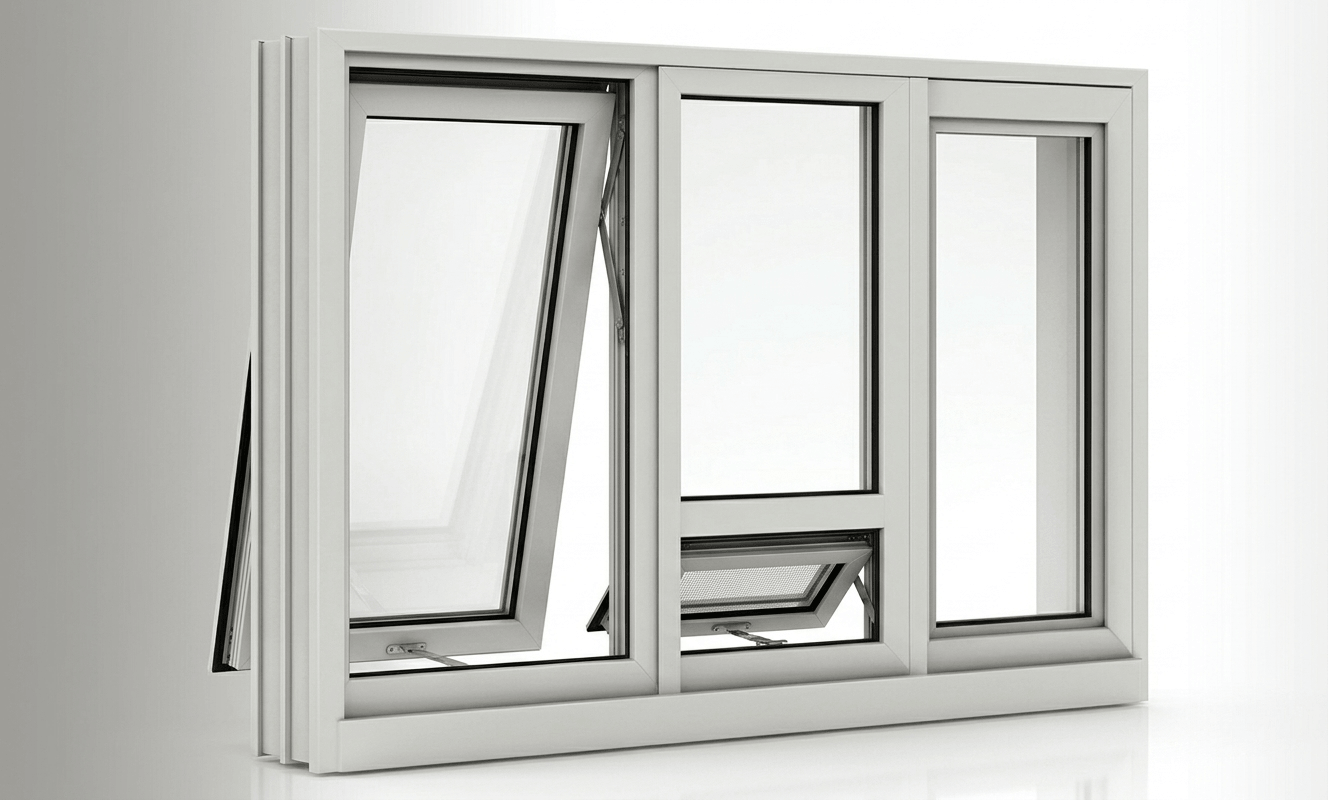
Fixed uPVC Ventilator
This does not open. It is mainly used where constant airflow is required without manual operation.
Top-Hung Ventilator
Opens outward from the top. Ideal for bathrooms as it allows airflow while preventing rainwater entry.
Casement Ventilator
It opens like a small door to offer better airflow control.
Tilt & Turn Ventilator
This type of ventilator offers flexibility—it can tilt slightly or open fully. More common in premium setups.
Sliding Ventilator
These ventilators move horizontally, making them useful where space is limited.
Based on Louver Design
Fixed Louvered Ventilator
This fixed ventilator has angled slats, allowing airflow. However, it blocks direct visibility.
Adjustable/Movable Louvered Ventilator
Louvers can be moved or adjusted to control the flow of air.
Combination Louver
These louvers combine glass with different designs for both light and ventilation.
Based on Specialised Features
Ventilator with Exhaust Fan Provision
Designed to accommodate exhaust fans, especially in kitchens and bathrooms.
Glass Ventilator (Fixed/Toughened)
Used where light is also required, along with ventilation.
Mesh/Mosquito Net Provision
Prevents the entry of insects and bugs, and allows air circulation.
Ideal Places to Install uPVC Ventilators in Your Home
Bathrooms
This is the most common area. Helps remove moisture and keeps the space dry.
Kitchens
When used in kitchens, it removes smoke, heat, and cooking odours.
Utility Areas
They are also used in laundry spaces because these areas need airflow to avoid dampness.
Commercial Spaces
Ventilators are widely used in washrooms, storage rooms, and service areas.
Design Options and Customization in uPVC Ventilators
Sizes and Shapes
They can be customised in various sizes and shapes, but it also depends on the available wall space. Rectangular shape is common, but can be customised in other shapes.
Glass Options
Various glass options are also available – frosted glass, clear glass, and toughened glass.
Frame Colours
They come in many colour options, including white, grey, brown, and wood finish tones.
How uPVC Ventilators Airflow, Indoor Comfort
Natural Ventilation
It maintains a balance inside the room by allowing movement of airflow.
Reducing Moisture and Odours
They reduce moisture and odours in space, where humidity builds up quickly.
Installation Process of uPVC Ventilators
Preparation: First, the openings are properly cleaned before fixing the frames. For a proper fit, the openings must be larger than the frame, so it fits easily.
Leveling: The frames are fixed into the opening using small plastic spacers (packers), which help them remain straight without any bending.
Bolting: Screws are then inserted into the frame along the wall with strong, rust-proof screws.
Glass: Glass is placed on the frame, snapping the plastic strips (beads) around the edges to hold the glass tight.
Sealing: The gaps between the frame and wall are filled with silicone, and it is done from inside and outside to protect it from external forces.
Testing: At this stage, the handles are installed on systems. After installing, handles must be inspected to check their functionality.
Why Professional Installation Matters
Poor installation can lead to air leakage or water seepage. A perfect fit helps in improving performance and durability. Choosing an experienced installation service provider will fulfill the main purpose of installing ventilators.
Maintenance Tips for Long-Lasting Performance
Wipe ventilators with a damp cloth and water, and avoid using harsh chemicals. Do not apply extra force while opening or closing t o avoid damage. Also, occasionally check hinges, locks, and fittings.
Why Choose Aparna Venster for uPVC Ventilators
Aparna Venster uses high-quality uPVC that offers better UV resistance and durability. Let’s see a few reasons why it is a preferred choice for many:
Advanced Materials & Manufacturing: Aparna uses high-quality materials to increase durability and prevent warping and cracking. Its state-of-the-art manufacturing facilities use advanced machines imported from Germany to provide quality products.
Superior Performance
Venster specialises in ventilator systems that offer good thermal insulation and sound insulation to offer comfort to its customers.
Expert Services: Venster offers end-to-end ventilator solutions. It takes care of everything – from expert installation to reliable post-sale service, Venster ensures customer satisfaction.
Cost of uPVC Ventilators in India
The cost of uPVC ventilators depends on size, type, design, glass selection, and additional features. Instead of considering only the price, homeowners need to focus on brand, quality and long-term value.
Common Mistakes to Avoid When Choosing a uPVC Ventilator
Wrong Size
Choosing a very small ventilator may not provide enough airflow.
Poor Placement
Incorrect positioning reduces effectiveness.
Ignoring Airflow Needs
Ventilation requirements vary by room. One type does not fit all.
Summary
Despite its small appearance, a uPVC ventilator has a significant impact on comfort and hygiene. It provides useful advantages that fit modern homes, such as improved airflow and less upkeep.
If you are planning to upgrade or install new ventilators, choosing a reliable brand like Aparna Venster for a smoother installation process.
FAQs
What is a uPVC ventilator?
A uPVC ventilator is a small aperture with a uPVC frame that allows the movement of air in home spaces like bathrooms and kitchens.
What is a PVC ventilator?
A PVC ventilator is a ventilator made from ordinary PVC (Polyvinyl Chloride). PVC contains plasticisers or chemicals like BPA/phthalates for flexibility.
What is a uPVC ventilator window with an exhaust fan?
It is a ventilator designed with a provision to install an exhaust fan, which expels inside air. They are widely used in kitchens and bathrooms.
What is the size of a uPVC bathroom window with an exhaust fan?
The size of the uPVC bathroom window with an exhaust fan depends on the room’s space. Since they can be customised, the size really depends on the requirement. It is designed according to the available area and ventilation requirements.
Related posts:
 uPVC Doors: Simple Guide to Types, Benefits and Uses in Homes
 PVC vs uPVC vs CPVC: Key Differences Explained
 Bedroom Window Sizes Explained: A Complete Guide (2026)
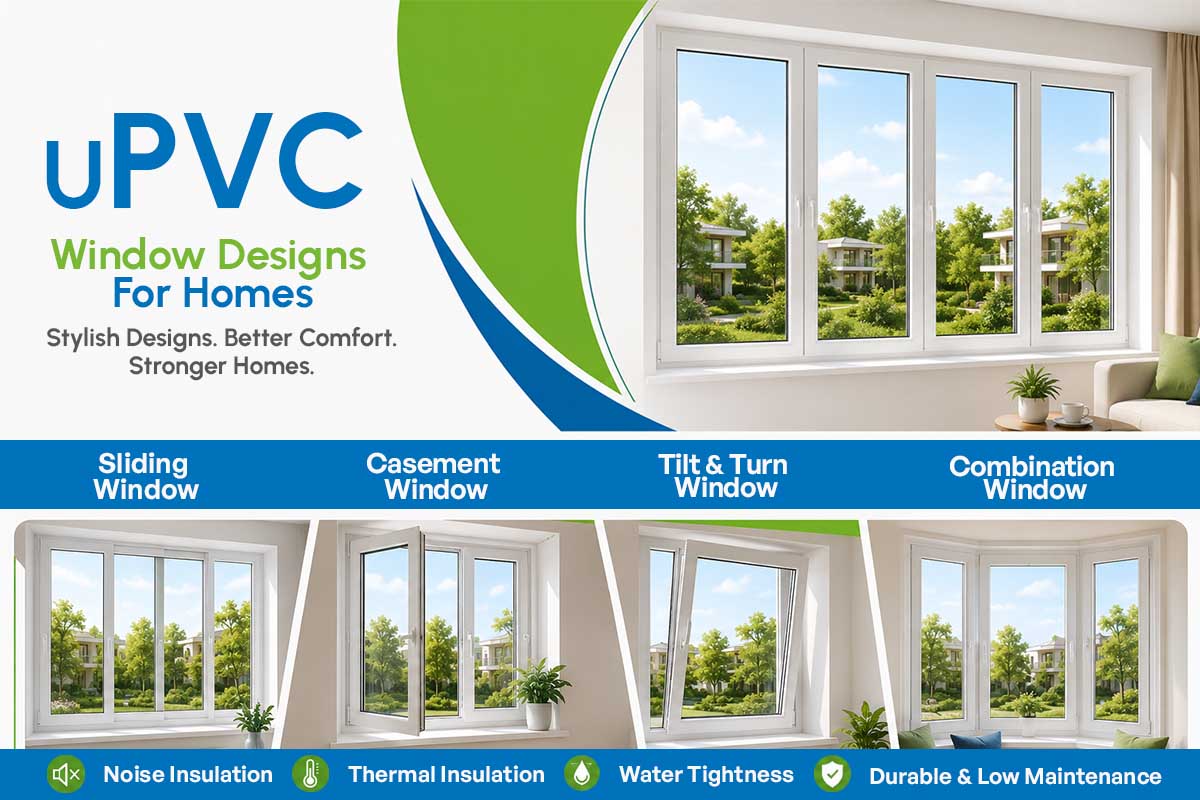 uPVC Window Designs for Homes: Types, Benefits and Buying Guide
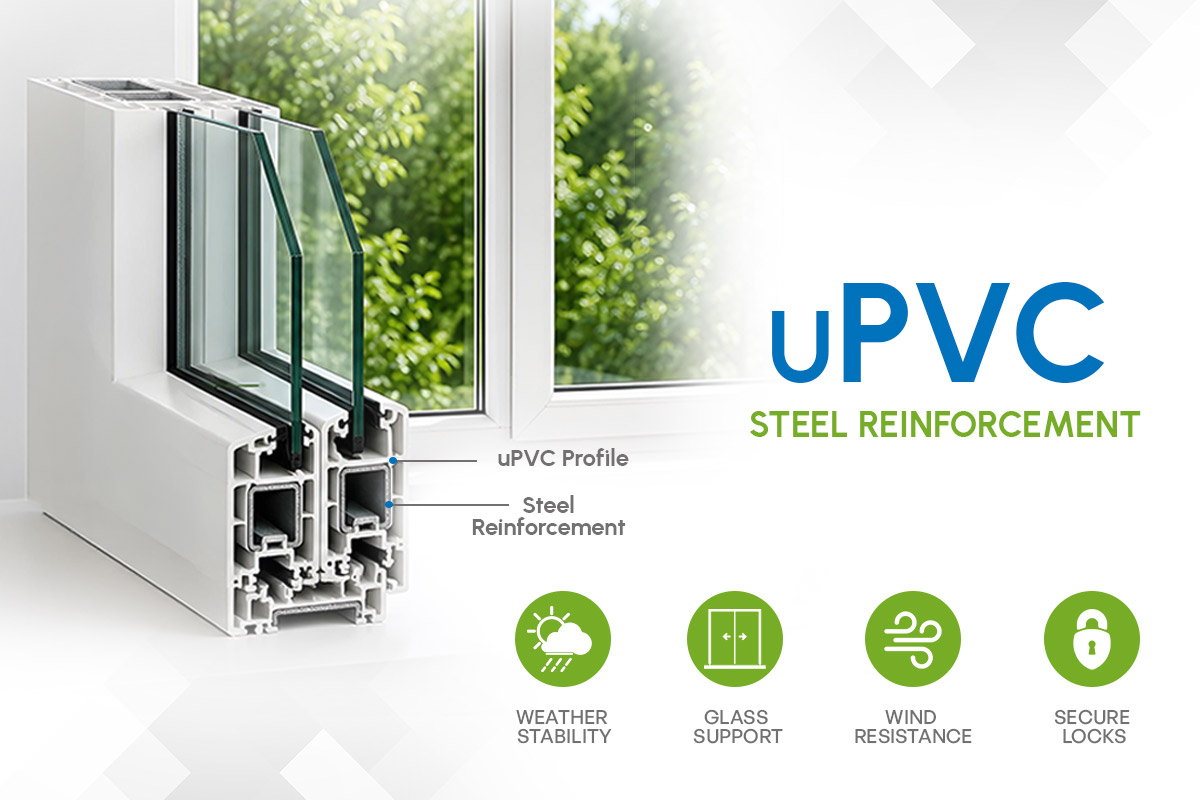 uPVC Steel Reinforcement for Windows & Doors: Types, Benefits & Applications
 English