
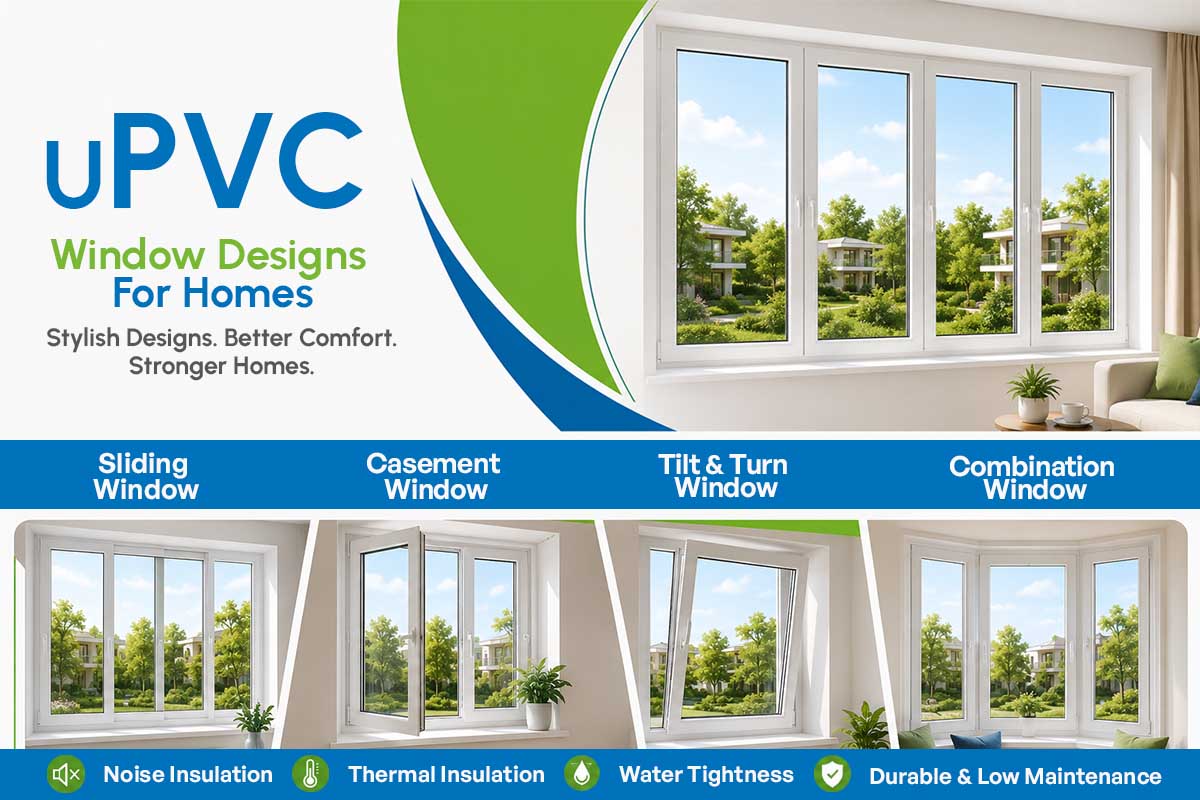
uPVC Window Designs for Homes: Types, Benefits and Buying Guide
Choosing the right uPVC window design is important when you are building or renovating a home. Windows affect ventilation, natural light, privacy, security, and the amount of outside noise entering the room.
There are various uPVC window designs available to choose from, and picking the right one can be confusing.
A sliding window can be a good option for a balcony or apartment where space is limited. Casement windows are suitable when better ventilation is required.
This guide explains the different types of uPVC windows, their benefits, suitable applications, glass options, colours, and the important points to check before buying.
Contents
- 1 Which uPVC Window Is Best for a Home?
- 2 What Are uPVC Windows?
- 3 Why Are uPVC Windows Popular for Indian Homes?
- 4 Types of uPVC Windows for Homes
- 5 Which uPVC Window Is Best for Each Room?
- 6 Benefits of uPVC Windows
- 7 Different uPVC windows Design Options
- 8 How to Choose the Right uPVC Windows for Your Home
- 9 Which Glass Is Best for uPVC Windows?
- 10 uPVC Window Colours and Finishes
- 11 What Should You Check Before Buying uPVC Windows?
- 12 uPVC vs Wooden Windows: Which Is Better?
- 13 Are uPVC Windows Suitable for Indian Climate?
- 14 How to Maintain uPVC Windows?
- 15 Latest uPVC Window Designs
- 16 Why Choose Aparna Venster uPVC Windows?
- 17 Common Mistakes to Avoid When Buying uPVC Windows
- 18 Takeaway:
- 19 FAQs
- 19.1 Which uPVC window design is best for Indian homes?
- 19.2 Which uPVC window is best for maximum ventilation?
- 19.3 Which uPVC window is best for apartments?
- 19.4 Which uPVC window design is best for balconies?
- 19.5 How Long Do uPVC Windows Last?
- 19.6 Are uPVC windows better than wooden windows?
- 19.7 Can uPVC windows reduce outside noise?
- 19.8 Which glass is best for uPVC windows?
- 19.9 How long do uPVC windows last?
- 19.10 Can uPVC windows be customized?
Which uPVC Window Is Best for a Home?
There is no single uPVC window design that is suitable for every home. The right choice depends on the room, available space, ventilation requirements, climate, and the overall design of the house.
| Requirement | Suitable uPVC Window |
|---|---|
| Apartment | Sliding window |
| Balcony | Sliding window |
| Better ventilation | Casement window |
| Large opening | Combination window |
| Controlled ventilation | Tilt & turn window |
| Villa | Villa window |
| Decorative design | Arch window |
| Better sound insulation | Suitable glazing with uPVC profile |
| Better thermal insulation | Multi-chamber profile with suitable glazing |
It is also important to remember that the performance of a window does not depend only on the uPVC profile. Glass, hardware, seals and installation also make a difference.
What Are uPVC Windows?
uPVC stands for Unplasticized Polyvinyl Chloride. It is a material used to make window frames and profiles.
uPVC windows are commonly used in residential buildings because they offer good durability and require less maintenance. They are resistant to moisture, termites and corrosion.
Unlike wooden windows, uPVC windows do not need regular painting or polishing. They are available in different opening styles and can be combined with different types of glass, hardware, and finishes.
Why Are uPVC Windows Popular for Indian Homes?
Indian homes experience different weather conditions depending on the location. Some areas have high temperatures, while coastal regions have high humidity, and some parts of the country receive heavy rainfall.
This makes the choice of windows important.
uPVC windows are considered for homes because they offer:
- Low maintenance
- Resistance to moisture
- Resistance to corrosion and termites
- Thermal insulation
- Sound insulation when combined with suitable glass
- Different opening styles
- Multi-point locking options
- Different colours and finishes
- Double and triple glazing options
The exact requirements can be different for an apartment, independent house or villa.
Types of uPVC Windows for Homes
There are different types of uPVC windows available for residential use. Each design has its own advantages and is suitable for different spaces.
1. Sliding uPVC Windows
Sliding windows open by moving horizontally along a track. They do not require extra space for the shutter to swing open, which makes them useful for smaller rooms and areas where space is limited.
They are commonly used in apartments, balconies, kitchens, and bedrooms.
Where Can Sliding Windows Be Used?
Sliding uPVC windows are suitable for:
- Apartments
- Balconies
- Kitchens
- Bedrooms
- High-rise homes
- Areas with limited space
For example, if a balcony has limited floor space, a sliding window can be more convenient because the shutter moves along the track instead of opening into the available area.
2. Casement uPVC Windows
Casement windows are attached to the frame with hinges and open from the side. They can be designed to open inward or outward depending on the window configuration.
One of the main advantages of casement windows is ventilation. They can open widely and allow more air into the room.
They are commonly used in bedrooms, living rooms, dining areas, and independent houses.
Casement windows can also be combined with suitable glazing and locking systems for better insulation and security.
Where Are Casement Windows Suitable?
- Bedrooms
- Living rooms
- Dining rooms
- Study rooms
- Independent houses
3. Arch uPVC Windows
Arch windows have a curved design at the top. They are mainly chosen when homeowners want the window to add a decorative element to the house.
They can be used in villas, premium homes, entrances, and staircase areas.
An arch window can be a good choice when the house has traditional or decorative architectural elements.
4. Combination uPVC Windows
Combination windows use two or more window configurations together in one opening.
For example, a large window can have fixed glass in one section and sliding or casement shutters in another section. This allows homeowners to have a larger glass area while still getting ventilation from the opening sections.
Combination windows can be considered for:
- Large living rooms
- Villas
- Corner windows
- Duplex homes
- Large residential openings
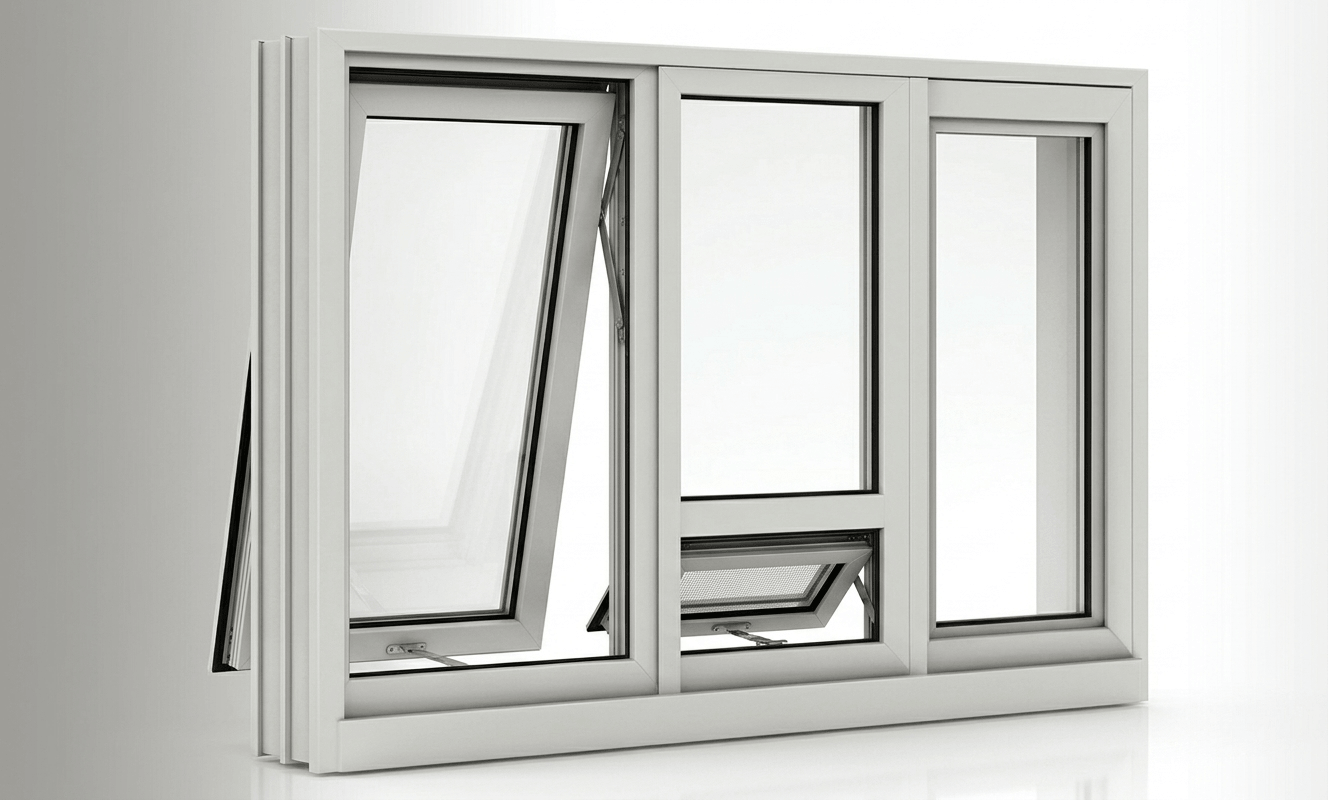
5. Tilt & Turn uPVC Windows
Tilt & turn windows offer two opening options.
The window can tilt slightly from the top when you need ventilation. It can also open fully when more airflow is required or when you need to clean the window.
This type of window can be useful in kitchens, bathrooms, bedrooms, study rooms and high-rise apartments.
The main advantage is that you can control how much the window opens according to your requirement.
6. Villa uPVC Windows
Villa windows are designed for larger independent homes where ventilation, security and appearance are important.
The source material includes features such as twin sashes, integrated grill options and built-in mosquito mesh.
They can be used in villas, independent houses, farmhouses and premium residential projects.
Which uPVC Window Is Best for Each Room?
The best window design can change from one room to another.
uPVC Windows for Living Rooms
Casement and combination windows are good options for living rooms.
Casement windows can provide good ventilation, while combination windows are useful for larger openings where you want both fixed glass and opening sections.
uPVC Windows for Bedrooms
Casement windows can be considered for bedrooms where ventilation is important.
If the bedroom faces a busy road, it is also worth paying attention to the glass specification because the right glazing can help reduce outside noise.
uPVC Windows for Kitchens
Sliding windows are useful in kitchens where space is limited or where the window is close to kitchen cabinets.
Tilt & turn windows are another option when controlled ventilation is required.
uPVC Windows for Bathrooms
Tilt & turn windows can be useful in bathrooms because they allow controlled ventilation without having to open the complete window.
uPVC Windows for Balconies
Sliding windows are commonly used for balconies because they do not take up additional space when opened.
They can also provide a wider view outside.
uPVC Windows for Staircases
Arch windows can be considered for staircases when you want to bring in natural light and also add a decorative feature to the space.
uPVC Windows for Different Types of Homes
Different homes may require different window designs.
| Type of Home | Windows to Consider |
|---|---|
| Apartment | Sliding |
| Independent House | Casement and Villa |
| Luxury Villa | Combination and Arch |
| Duplex | Combination |
| Farmhouse | Villa |
| Premium Residence | Combination and Fixed Glass |
These are general recommendations. The final choice should depend on the size of the opening, room requirements and the design of the house.
Benefits of uPVC Windows
uPVC windows are chosen for several reasons. Their performance depends on the complete window system, including the profile, glass, hardware and installation.
Thermal Insulation
The construction of the uPVC profile can help reduce heat transfer.
Multi-chambered profiles have air pockets inside the frame, which can help improve insulation. When combined with suitable double or triple glazing, the complete window can offer better thermal performance.
This can be useful in homes located in warmer regions.
Sound Insulation
uPVC windows can help reduce outside noise when the right glass and sealing system are used.
The acoustic performance depends on factors such as the glazing, gaskets, seals and installation. Double or triple glazing can be considered for homes where outside noise is a major concern.
This can be especially useful for homes located near busy roads or other noisy areas.
Weather Resistance
uPVC is resistant to moisture, corrosion, and termites. It can be used in different weather conditions, including areas with heavy rainfall and coastal locations.
However, the window specification should still be selected according to the local climate and building requirements.
Low Maintenance
One of the main reasons homeowners choose uPVC is that it is easy to maintain.
The frames do not need regular painting or polishing. Basic cleaning and periodic maintenance of the hardware and seals are usually enough.
Security
uPVC windows can be fitted with multi-point locking systems and different types of safety glass.
If security is important, check the locking system, hardware, glass and overall construction of the window instead of looking only at the profile.
Different uPVC windows Design Options
uPVC windows are available in different opening styles, colours and finishes.
This gives homeowners more freedom to select a window that matches both the interior and exterior of the house.
How to Choose the Right uPVC Windows for Your Home
Before selecting a window, first understand what you need from it.
Ask yourself a few basic questions.
Does the room need more ventilation? Is there enough space for the shutter to open? Is the house located in a noisy area? Does the location receive heavy rainfall? Is security a major concern?
Once these points are clear, choosing the window becomes easier.
Consider the Available Space
If there is furniture, a kitchen counter, or another obstruction near the window, a sliding window may be more convenient than an inward-opening window.
Consider the Weather
The climate of your location should also be considered.
Homes in coastal areas may have different requirements from homes in hot and dry regions. The source material also identifies hot regions, coastal areas, and areas with heavy rainfall as conditions to consider when selecting windows.
Consider Outside Noise
If your home is near a busy road or a commercial area, check the glass specification carefully.
The profile is important, but the glazing and sealing system also have a major role in reducing outside noise.
Consider Security
Look for suitable locking hardware and glass based on the security requirements of the home.
Multi-point locking systems are one option that can be considered.
Consider the Appearance
The window colour should go well with the overall design of the house.
White can suit simple and modern interiors. Grey and black can work well with contemporary designs, while wood-finish laminates can give a warmer appearance.
Which Glass Is Best for uPVC Windows?
There is no single glass type that is best for every home.
The choice depends on what you need from the window.
| Glass Type | Main Purpose |
|---|---|
| Double Glazing | Better insulation |
| Triple Glazing | Higher insulation requirements |
| Low-E Glass | Improved energy efficiency |
| Toughened Glass | Safety |
| Laminated Glass | Security and sound insulation |
The source material recommends considering double glazing, Low-E glass, toughened glass and laminated glass for different requirements.
Instead of selecting glass only based on price, discuss the actual requirement of each room with the window manufacturer.
uPVC Window Colours and Finishes
The colour and finish of a window can change the appearance of the entire room or exterior.
Common options include:
- White
- Golden Oak
- Walnut
- Rustic Oak
- Dark Oak
- Mahogany
- Anthracite Grey
- Black
- Dual-colour finishes
The source material specifically mentions Golden Oak, Walnut, Rustic Oak, Dark Oak and Mahogany among the wood-finish options.
For a modern house, grey or black finishes can work well. If you prefer a more traditional appearance, a wood finish can be considered.
What Should You Check Before Buying uPVC Windows?
Do not compare uPVC windows only based on the price quoted.
Check what is included in the complete window system.
| Feature | Why It Matters |
|---|---|
| uPVC Profile | Strength and insulation |
| Glass | Insulation, noise and safety |
| Hardware | Smooth operation |
| Locking System | Security |
| Seals | Helps prevent air and water leakage |
| Drainage | Helps remove rainwater |
| Installation | Affects overall performance |
| Warranty | Support after installation |
Two quotations may look similar at first but may include different profile specifications, glass, hardware or installation services.
uPVC vs Wooden Windows: Which Is Better?
Both uPVC and wooden windows have their own advantages.
Wood is preferred by some homeowners because of its natural and traditional appearance. uPVC is often selected when low maintenance, weather resistance, and modern designs are more important.
| Feature | uPVC Windows | Wooden Windows |
|---|---|---|
| Maintenance | Low | Higher |
| Weather resistance | High | Requires regular care |
| Thermal insulation | Excellent | Good |
| Sound insulation | Good with suitable glazing | Good |
| Design options | Different styles and finishes | Traditional appearance |
| Security | High with suitable hardware | Good |
| Suitable for | Apartments, villas and modern homes | Traditional-style homes |
The better option depends on the requirements of your home and the type of appearance you prefer.
Are uPVC Windows Suitable for Indian Climate?
Yes, uPVC windows can be used in different parts of India.
They are resistant to moisture, termites and corrosion, which makes them suitable for many residential applications. The exact profile, glass, and hardware should still be selected according to the local weather conditions.
For example, a coastal home may have different requirements from a home located in a hot and dry region.
How to Maintain uPVC Windows?
uPVC windows do not require complicated maintenance.
A few simple steps can help keep them working properly:
- Clean the frame with a soft cloth and mild soap solution.
- Keep drainage holes free from dirt.
- Lubricate hinges and locks periodically.
- Check the weather seals.
- Check for loose hardware.
- Avoid abrasive cleaners and harsh chemicals.
The source recommends checking drainage holes every three months, lubricating hinges and locks every six months or once a year, and checking weather seals annually.
If a window becomes difficult to open or close, it is better to check the hardware rather than forcing it.
Latest uPVC Window Designs
Window designs are changing along with modern home architecture.
Larger glass areas, slim profiles and simple finishes are becoming popular in contemporary homes. The source also highlights floor-to-ceiling windows, matte black and anthracite grey finishes, wood-look laminates, corner glazing, smart locking systems, Low-E glass and double or triple glazing.
However, the latest design is not always the right choice for every home.
For example, a large glass window may look attractive, but the size and glass specification should be suitable for the opening, location and overall building requirements.
Why Choose Aparna Venster uPVC Windows?
Aparna Venster offers lead-free uPVC window systems for modern Indian homes.
The available options include sliding, casement, tilt & turn, villa, combination and arch windows. The source also mentions double glazing, toughened glass, laminated glass, Low-E glass, multi-point locking systems and professional installation.
This range allows homeowners to choose different window configurations based on the requirements of each room.
Common Mistakes to Avoid When Buying uPVC Windows
Buying a window only because it looks good can lead to problems later.
Here are some common mistakes to avoid.
Choosing Only Based on Price
The cheapest quotation may not always offer the best value.
Compare the profile, glass, hardware, installation, and warranty before making the final decision.
Ignoring the Glass
Many people spend time comparing window profiles but do not pay enough attention to the glass.
The glass can affect insulation, noise reduction, and safety, so it should be selected according to the requirements.
Selecting the Wrong Opening Style
Before choosing the design, check the available space around the window.
A casement window may not be convenient if furniture or kitchen fittings are blocking the opening area.
Not Checking the Hardware
Handles, hinges, locks, and other hardware are used regularly. Their quality affects the operation and security of the window.
Ignoring Installation Quality
Even a good-quality window may not perform as expected if it is not installed correctly.
Proper measurement, alignment, fastening, and sealing are important during installation.
Takeaway:
Choosing the right uPVC windows depends on your requirements and needs. Check the available space, ventilation requirements, outside noise, weather conditions and security needs. After that, select the window style, glass and finish.
Sliding windows are a good option for space-constrained apartments and balconies. Casement windows are a good option where ventilation is important. Combination windows can work well for large openings; tilt & turn, villa and arch windows can be selected based on specific requirements.
Also, do not forget about the glass, hardware, and installation, as these are important factors for the overall performance of the window.
Aparna Venster offers different uPVC window designs and glass options for modern Indian homes, allowing homeowners to select a window system based on their specific requirements. Get in touch with us today for your project requirements.
FAQs
Which uPVC window design is best for Indian homes?
It depends on the room and the requirements. Sliding windows are useful for apartments and balconies, while casement windows are a good option where ventilation is important. Combination, tilt & turn, villa and arch windows can be selected for other requirements.
Which uPVC window is best for maximum ventilation?
Casement windows are suitable when maximum ventilation is required because the shutter can open widely. They swing open outward or inward like a door, offering a 100% clear opening.
Which uPVC window is best for apartments?
Sliding windows are a good choice for many apartments because they save space and can provide a wide outside view. They are perfect for compact apartments.
Which uPVC window design is best for balconies?
Sliding uPVC windows are suitable for balconies because they do not need additional space for the shutter to open. Also, casement windows and tilt-and-turn windows are good options if you need more fresh air.
How Long Do uPVC Windows Last?
Good-quality uPVC windows can last for more than 25 years when they are properly installed and maintained, according to the source material.
The actual service life can also depend on the quality of the profile, hardware, glass, installation and regular maintenance.
Are uPVC windows better than wooden windows?
It depends on your requirements. Wooden windows offer a traditional appearance, and uPVC windows require less maintenance and are resistant to moisture, termites and corrosion.
Can uPVC windows reduce outside noise?
Yes. uPVC windows help reduce outside noise when combined with suitable glazing, seals, gaskets and proper installation. Double or triple glazing can be considered where noise reduction is important.
Which glass is best for uPVC windows?
The right glass depends on the requirement. Double glazing can provide better insulation, Low-E glass can support energy efficiency, toughened glass can improve safety, and laminated glass can provide additional security and sound-insulation benefits.
How long do uPVC windows last?
Good-quality uPVC windows last for more than 25 years when properly installed and maintained. Please follow manufacturers’ tips for a long lifespan.
Are uPVC windows low maintenance?
Yes, they are easy to maintain. They do not need regular painting or polishing. Regular cleaning, checking the seals and drainage holes, and maintaining the hardware are usually sufficient.
Can uPVC windows be customized?
Yes. Depending on the window system, homeowners can choose from different opening styles, colours, finishes, glass options, and hardware configurations.
Related posts:
 uPVC Doors and Windows in Bengaluru: Types, Features and Buying Guide
 uPVC Doors: Simple Guide to Types, Benefits and Uses in Homes
 Floor-to-Ceiling Windows: Types, Benefits, Cost and Design Ideas for Modern Homes
 What Is a uPVC Ventilator? Benefits, Types and Uses Explained
 uPVC Steel Reinforcement for Windows & Doors: Types, Benefits & Applications
 English