
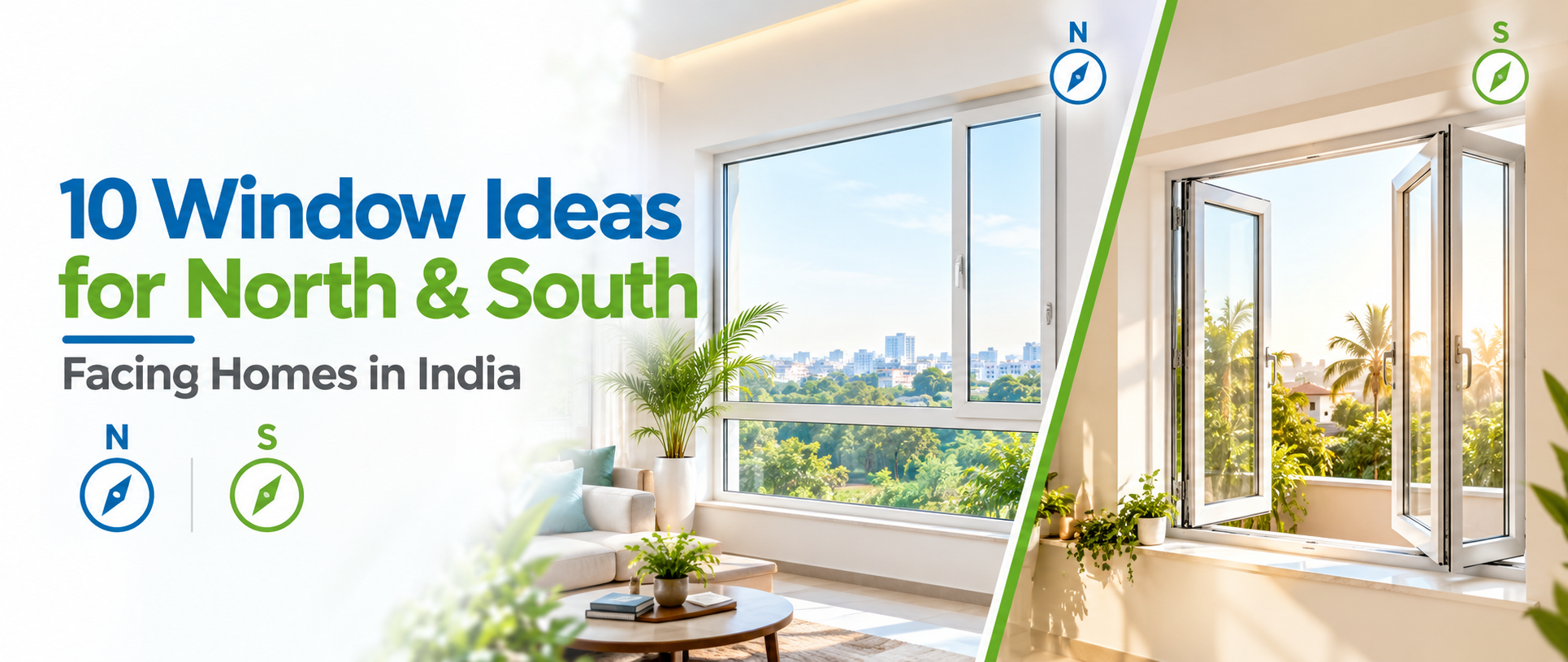
10 Window Ideas for North & South Facing Homes in India
A north-facing or south-facing house can have very different window requirements depending on the direction each window faces. Sunlight, heat, glare, ventilation and privacy can change from one wall to another.
This guide shares 10 practical window ideas for north- and south-facing homes in India, and also covers which uPVC window types suit different rooms. The right choice always depends on your location, climate zone (hot-dry, composite or warm-humid), local building rules and your home’s design, so treat these as starting points rather than fixed rules.
Contents
- 1 The 10 Window Ideas at a Glance
- 2 What Does North-Facing or South-Facing Mean?
- 3 North-Facing vs South-Facing Windows
- 4 5 Window Ideas for North-Facing Walls and So-Facing Walls
- 4.1 1. Use Larger Windows on North-Facing Walls, With Shading
- 4.2 2. Add a Chajja Above North-Facing Windows
- 4.3 3. Use Side Fins for North-East and North-West Windows
- 4.4 4. Keep North-Facing Glass Clear or Lightly Tinted
- 4.5 5. Combine Fixed and Opening Windows
- 4.6 6. Size the Chajja to the South-Facing Window
- 4.7 7. Extend the Sunshade Beyond the Window Edges
- 4.8 8. Pair Larger South-Facing Openings With Good Shading
- 4.9 9. Choose Glass Based on Window Size and Location
- 4.10 10. Use a Balcony or Deep Overhang as a Natural Sunshade
- 4.11 What About East & West-Facing Windows?
- 5 Which uPVC Window Type Should You Choose?
- 6 Room-by-Room Window Ideas
- 7 Window Safety
- 8 Window Planning Checklist
- 9 Frequently Asked Questions
- 9.1 Is a north-facing house better than a south-facing house?
- 9.2 Are north-facing windows good for homes in India?
- 9.3 Are south-facing windows good for Indian homes?
- 9.4 Which direction is best for large windows?
- 9.5 How can I reduce heat through windows?
- 9.6 Are sliding windows better than casement windows?
- 9.7 Should I use double glazing for south-facing windows?
- 10 Plan the Right Windows for Your Home
The 10 Window Ideas at a Glance
| No. | Window Idea | Suitable For | Main Benefit |
|---|---|---|---|
| 1 | Use larger windows on north-facing walls, with shading | North | Brings in plenty of daylight |
| 2 | Add a chajja above north-facing windows | North | Helps control direct sun in summer |
| 3 | Use side fins for north-east and north-west windows | North-East / North-West | Helps reduce angled sunlight |
| 4 | Keep north-facing glass clear or lightly tinted | North | Maintains daylight |
| 5 | Combine fixed and opening windows | North | Balances light and ventilation |
| 6 | Size the chajja to the south-facing window | South | Helps reduce direct sun |
| 7 | Extend the sunshade beyond the window edges | South | Provides better side protection |
| 8 | Pair larger south-facing openings with good shading | South | Daylight and ventilation with less heat |
| 9 | Choose glass based on window size and location | South | Helps manage heat and glare |
| 10 | Use a balcony or deep overhang as a natural sunshade | South | Additional protection from the sun |
What Does North-Facing or South-Facing Mean?
A north-facing house generally has its main entrance facing north, and a south-facing house has its main entrance facing south.
However, the direction of the house does not tell you the direction of every window. A north-facing home can have north-, south-, east- and west-facing windows, and each receives sunlight differently. When planning windows, look at the direction of each individual wall rather than relying only on the direction of the house.
North-Facing vs South-Facing Windows
Both can work well when designed with the right combination of size, glass and shading.
North-facing windows are often a good fit for rooms that need steady daylight with little harsh sun. Depending on your latitude and the season, though, direct sun can reach them on summer mornings and evenings, so they should not be left unshaded by default. South-facing windows can also be made comfortable with suitable external shading.
The ideal choice depends on your location, the room, window size, surrounding buildings and how much sunlight and ventilation you want.
Also Read: Which uPVC Window Type Should You Choose?
5 Window Ideas for North-Facing Walls and So-Facing Walls
1. Use Larger Windows on North-Facing Walls, With Shading
A north-facing wall can suit larger openings in rooms that need generous natural light, such as living rooms and studies. Depending on your location and the season, summer sun may still reach these windows at the start or end of the day, so plan some shading as well. Before finalising the size, think about how air will flow through the room, where furniture will sit and how visible the room is from outside.
2. Add a Chajja Above North-Facing Windows
A chajja or external sunshade can help reduce direct sunlight entering through a window. Even where a window receives less direct sun, a suitable overhang can improve comfort. Plan its size according to the window size and position.
3. Use Side Fins for North-East and North-West Windows
On walls that turn towards the north-east or north-west, the sun can reach the glass from the side at a shallow angle, mostly early and late in the day. A flat chajja does little against this kind of light. Upright elements such as fins, deeper wall reveals or planting beside the window work better, and fins can also give the facade a distinctive look.
4. Keep North-Facing Glass Clear or Lightly Tinted
If daylight is a priority, clear or lightly tinted glass helps keep the interior bright. Very dark glass can reduce natural light. Select glass according to the room’s exposure, privacy needs, glare and overall design.
5. Combine Fixed and Opening Windows
Fixed glass and opening sashes together can provide both daylight and ventilation. The fixed section creates a larger glazed area, while the opening section lets fresh air in. This can work well in living rooms, studies and other spaces that need both.
6. Size the Chajja to the South-Facing Window
A south-facing window can receive a lot of sun, depending on where you live and the time of year. In summer the sun passes high overhead, so a projecting chajja keeps most of the glass in shade. In the cooler months the sun travels closer to the horizon and reaches under the projection, which brings in useful warmth and light. Instead of copying one standard depth for every opening, work out the projection from each window’s height and width.
7. Extend the Sunshade Beyond the Window Edges
A chajja that covers only the width of the window may not protect against sunlight entering at an angle. Extending it beyond the sides of the opening gives additional coverage, and side fins or vertical shading can be added where needed.
8. Pair Larger South-Facing Openings With Good Shading
A south-facing window does not have to be small. When the opening is well shaded from outside, a larger window can bring in more daylight and ventilation, particularly in frequently used rooms. What matters is not only the size of the window but how it is shaded.
9. Choose Glass Based on Window Size and Location
The right glass can make a difference to comfort, glare and energy performance. For larger windows, especially in air-conditioned rooms, you can consider double glazing or other suitable glass configurations. Tinted or specialised glass may also be an option depending on sunlight and privacy needs. External shading should still be considered alongside the glass.
10. Use a Balcony or Deep Overhang as a Natural Sunshade
A balcony, verandah or deep overhang above a south-facing opening can provide useful protection from direct sun. It can be especially effective for large balcony doors and windows, and lets you keep a larger opening with a shading element outside the glass. For homes with balconies, the balcony design can be treated as part of the overall shading plan.
What About East & West-Facing Windows?
The direction of the individual window can matter more than whether the house is north- or south-facing. East-facing openings catch the morning sun, while west-facing ones can take strong afternoon sun, so both may need more attention to external shading. You can consider:
- Vertical fins
- External screens
- Balconies or verandahs
- Deeper window reveals
- Suitable glass
- Smaller openings where appropriate
If a room has a large west-facing window, plan its shading at the same time as you select the window.
Which uPVC Window Type Should You Choose?
The best type depends on the room, available space, ventilation needs and overall design.
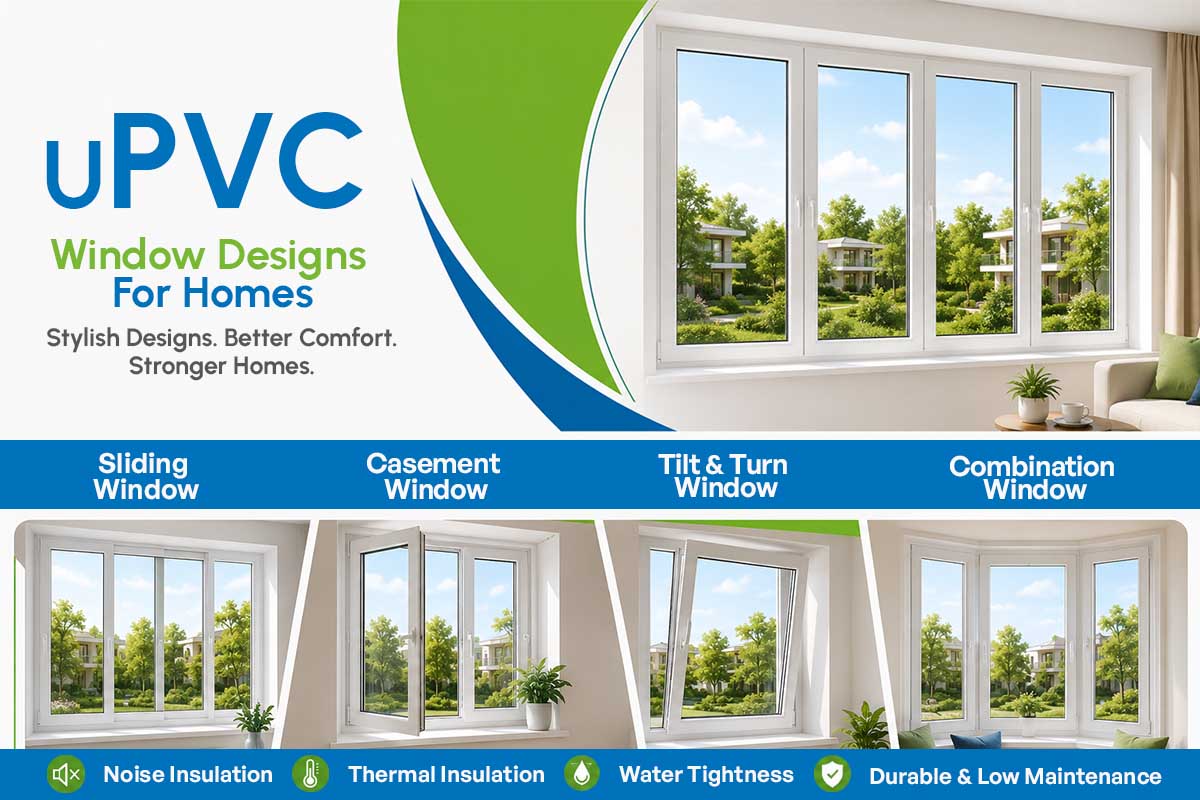
- Sliding windows suit places where space for opening a sash is limited, such as balconies.
- Casement windows can give a large opening area and suit rooms where ventilation is important.
- Tilt-and-turn windows offer flexible ventilation and can work well in bedrooms and upper-floor rooms.
- Fixed windows are useful when the main need is daylight and views.
- Combination windows bring fixed and opening sections together in one design.
The direction of the window should also guide your choice of glass and shading.
Room-by-Room Window Ideas
| Room | Suitable Window Approach | Things to Consider |
|---|---|---|
| Living Room | Large combination or sliding window | Daylight, ventilation and shading |
| Bedroom | Casement or tilt-and-turn window | Ventilation, privacy, external exposure and child safety |
| Kitchen | Casement or top-hung window | Ventilation and placement above counters |
| Study | Fixed + opening window | Daylight and glare |
| Bathroom | Top-hung or tilt-and-turn window | Privacy and ventilation |
| Staircase | Fixed or combination window | Daylight, ventilation and fall safety |
| Balcony | Sliding or slide-and-fold door | Opening size, shading and safety |
Window Safety
Windows and balcony doors on upper floors can be a fall risk, particularly in homes with children or pets. Consider fitting window restrictors, safety grills or guards, and keep furniture that can be climbed on away from openings. Check that any safety fitting still allows the window to be opened in an emergency, and follow local building and fire-safety requirements.
Window Planning Checklist
Before finalising your windows, check:
- Which direction does each window face?
- Which windows receive strong morning or afternoon sunlight?
- Do the windows need a chajja, fins or another external shade?
- How much ventilation does each room need?
- Is there enough space for the selected opening style?
- Does the glass provide the required level of daylight and privacy?
- Will grills, curtains or furniture interfere with the window?
- Are larger openings properly shaded?
- Are upper-floor windows and balcony doors fitted with suitable safety measures?
- Does the window design suit the overall elevation?
- Has the installation and drainage detail been planned properly?
Frequently Asked Questions
Is a north-facing house better than a south-facing house?
Neither direction is automatically better. Comfort depends on window orientation, shading, glass, ventilation, construction and the local climate.
Are north-facing windows good for homes in India?
They can be a good option for rooms that need natural daylight. Depending on your location, some direct summer sun may reach them, so plan shading, and also look at airflow, how overlooked the room is and the buildings around you.
Are south-facing windows good for Indian homes?
Yes, they can work well when planned with suitable external shading and appropriate glass.
Which direction is best for large windows?
There is no single answer for every home. North-facing walls can suit larger glazed areas, while south-facing windows can also work well when properly shaded. East and west openings generally need more attention to sunlight control.
How can I reduce heat through windows?
External shading is one of the first things to consider. Chajjas, balconies, fins and screens can reduce direct sunlight before it reaches the glass. The right glass can then add further performance depending on the window and room.
Are sliding windows better than casement windows?
It depends on the application. Sliding windows suit places where opening space is limited, while casement windows generally give a larger opening area for ventilation.
Should I use double glazing for south-facing windows?
Double glazing can be useful for larger windows and rooms where thermal comfort or outside noise is a concern. External shading should still be considered, particularly where the window receives direct sunlight.
Plan the Right Windows for Your Home
The best window design is not determined by the house facing alone. Look at each window’s direction, the sunlight it receives, the room’s ventilation needs, safety and the available shading. With the right combination of window style, glass and shading, both north- and south-facing homes can be bright, comfortable and well ventilated.
Aparna Venster offers a range of uPVC windows and doors that can be selected according to your home’s design and requirements. If you want a better performing uPVC windows and doors, please get in touch with our team for advice on your project.
Related posts:
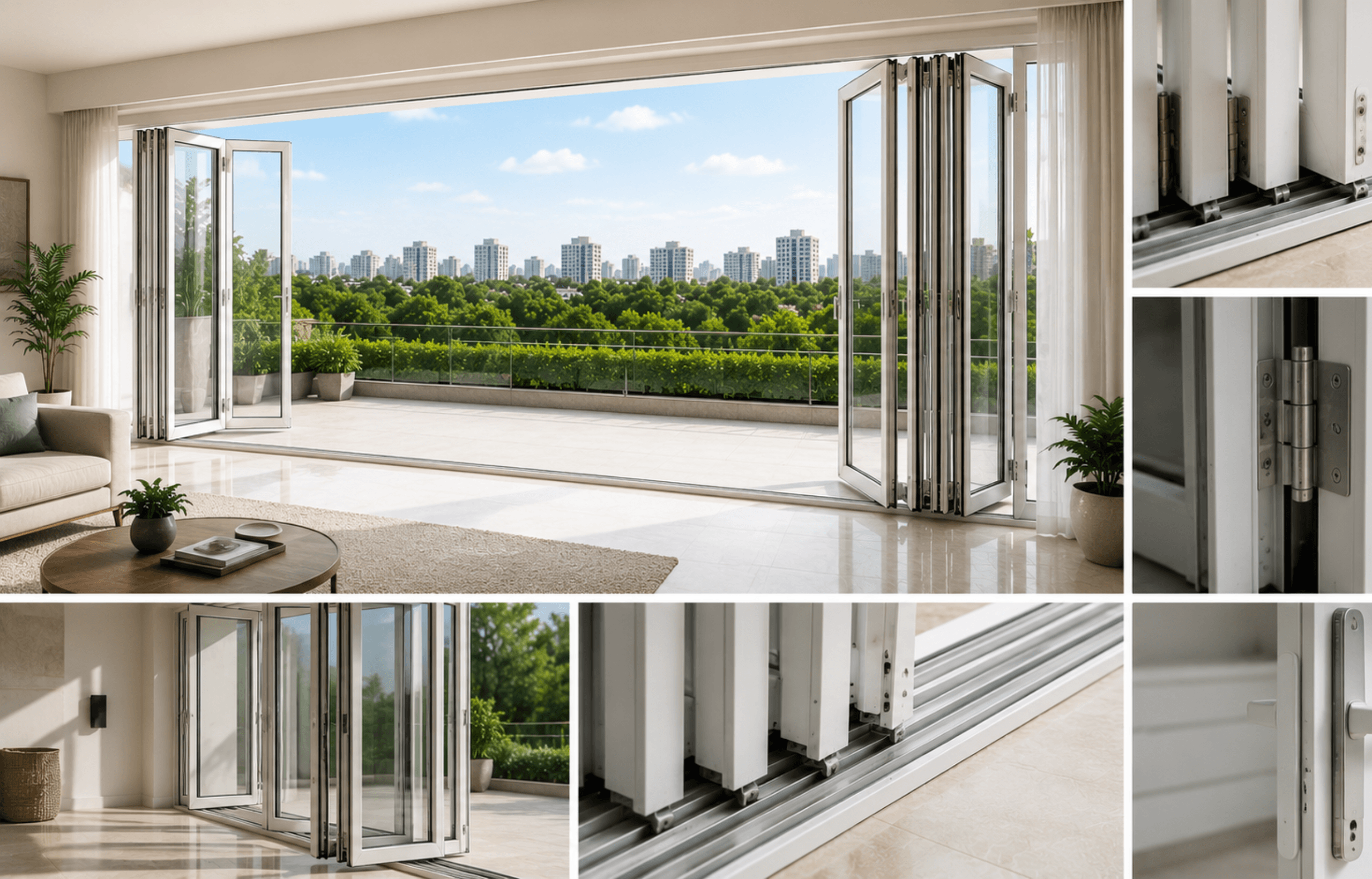 Top 10 uPVC Slide And Fold Door Ideas for Modern Homes in India
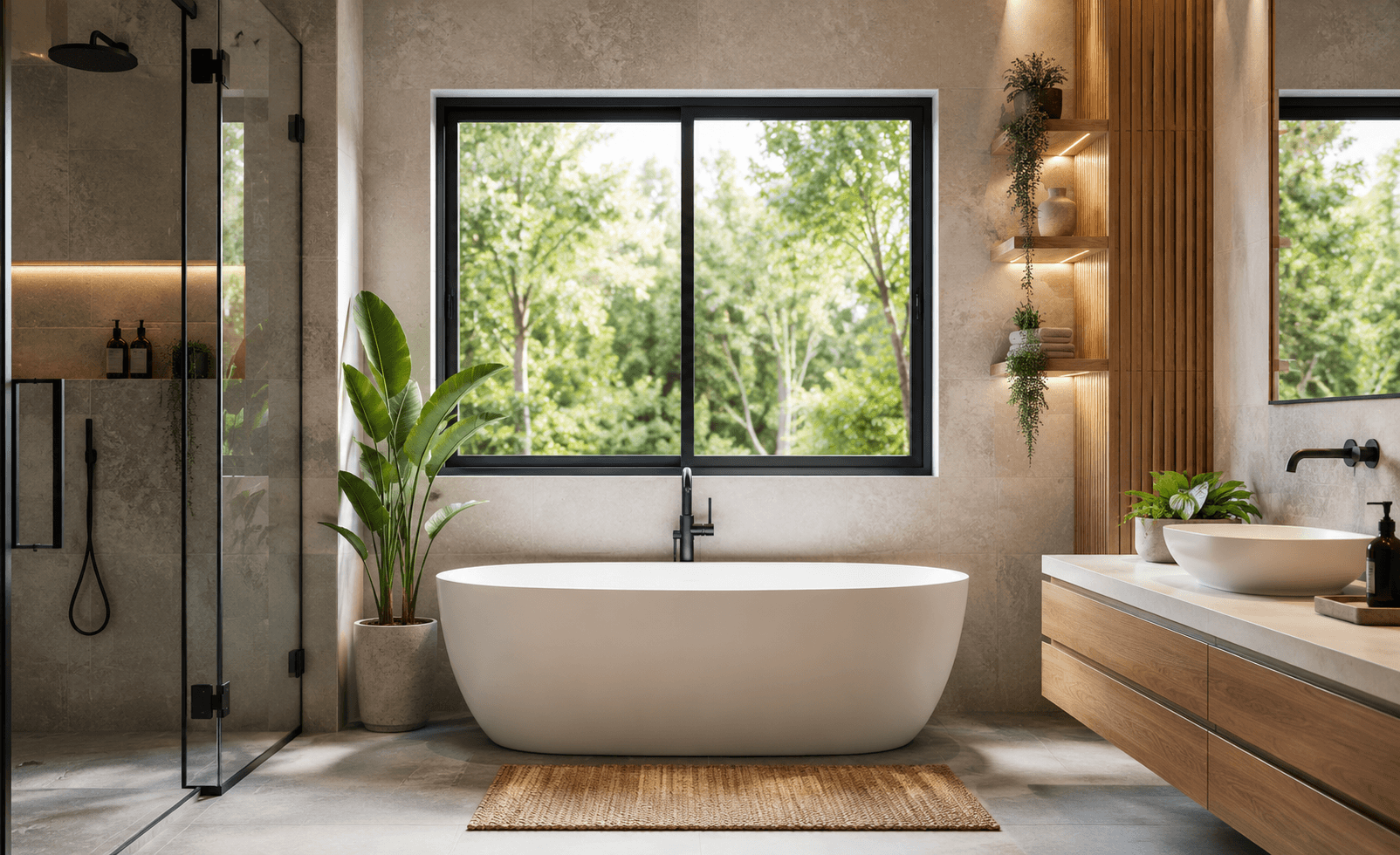 Top 10 Bathroom Window Design Ideas for Indian Homes
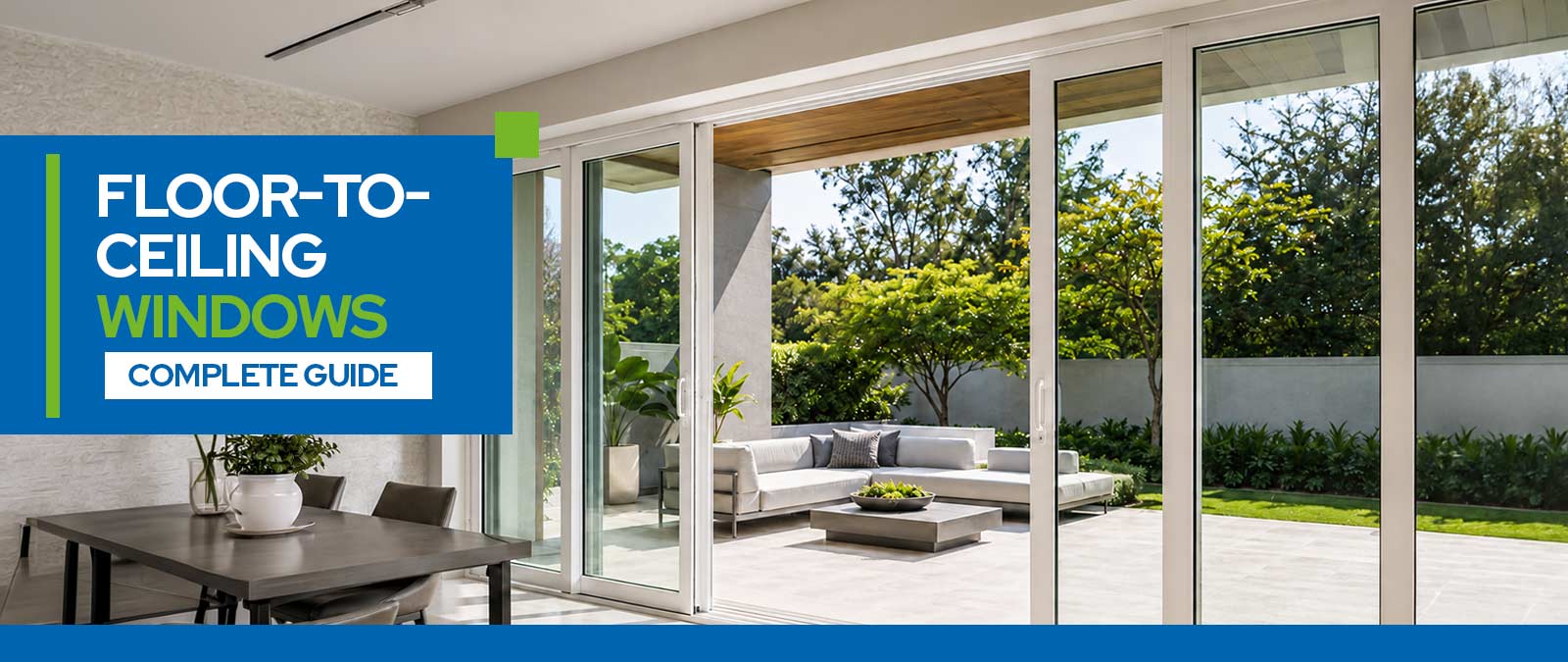 Floor-to-Ceiling Windows: Types, Benefits, Cost and Design Ideas for Modern Homes
 uPVC Window Designs for Homes: Types, Benefits and Buying Guide
 Best Interior Design Ideas to Match uPVC Windows and Doors
 English