
What are uPVC Doors? Complete Guide to Meaning, Benefits, Types & Maintenance
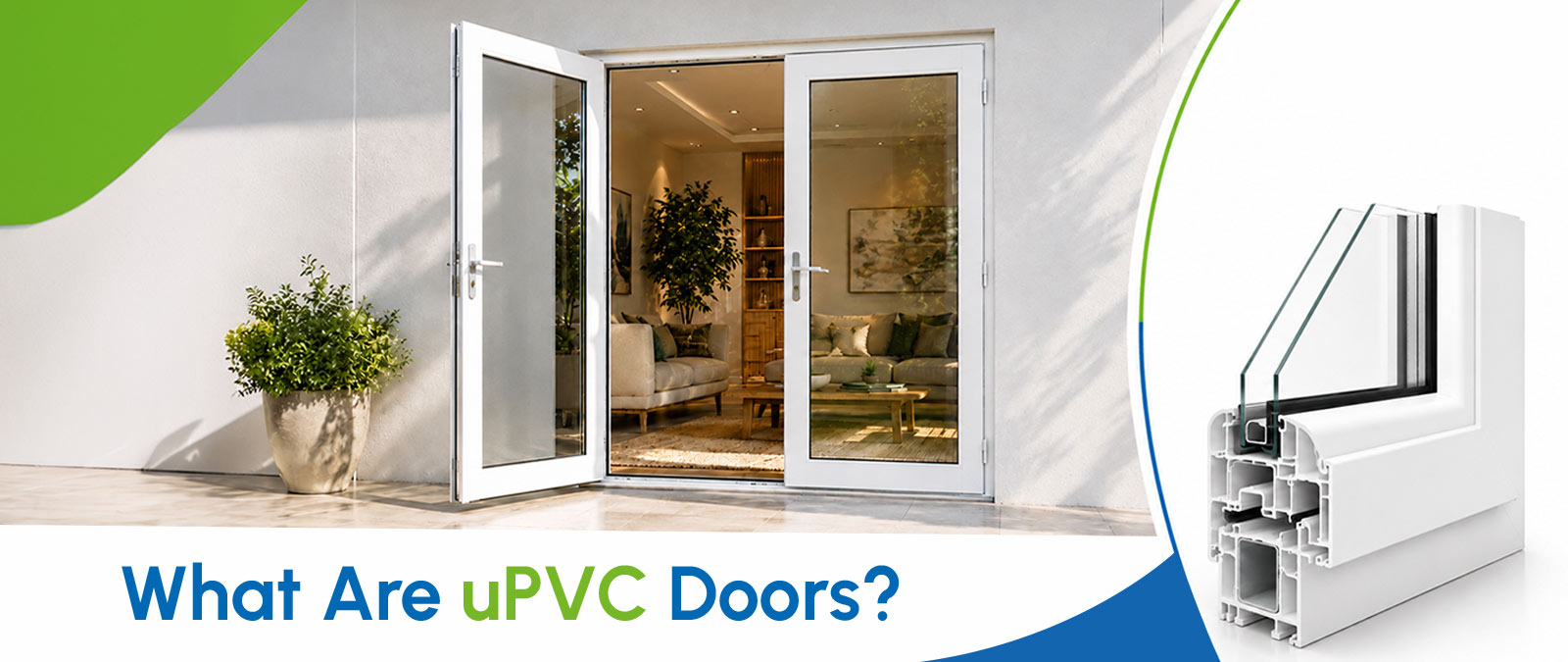
uPVC doors are made from unplasticised polyvinyl chloride, a rigid plastic material used for making doors and windows. The material does not rot or rust and is not affected by termites. It also handles moisture and regular weather conditions well.
Unlike normal PVC, uPVC does not have plasticisers. This keeps the material rigid and makes it suitable for door and window profiles.
This guide explains what uPVC doors are, how they are made, their benefits, types, common uses, installation, maintenance, and the things to check before buying one.
Contents
- 1 What is the Full Form of uPVC?
- 2 How uPVC Doors Are Made
- 3 Here’s the Step-by-Step Process
- 4 Key Benefits of uPVC Doors
- 5 Types of uPVC Doors
- 6 Where uPVC Doors Are Commonly Used
- 7 Installation: What to Expect
- 8 How to Maintain a uPVC Door
- 9 Common Mistakes to Avoid When Choosing uPVC Doors
- 10 uPVC vs PVC Doors: The Core Difference
- 11 PVC vs uPVC: Which Is Better for Doors?
- 12 Why Choose Aparna Venster
- 13 FAQ
- 13.1 What are uPVC doors made of?
- 13.2 Are uPVC doors good for Indian weather?
- 13.3 How long do uPVC doors last?
- 13.4 What is the difference between PVC and uPVC doors?
- 13.5 Are uPVC doors secure?
- 13.6 Do uPVC doors need a lot of maintenance?
- 13.7 Can uPVC doors be customised?
- 13.8 Are uPVC doors fire-safe?
- 13.9 Where should I install uPVC doors in my home?
- 13.10 Are uPVC doors eco-friendly?
What is the Full Form of uPVC?
uPVC stands for Unplasticised Polyvinyl Chloride. It is made from PVC resin, but it does not contain plasticisers. Plasticisers are used to make PVC softer and more flexible.
Since uPVC does not have these plasticisers, it stays rigid. This is one of the main reasons it is used for doors and windows in homes and commercial buildings.
How uPVC Doors Are Made
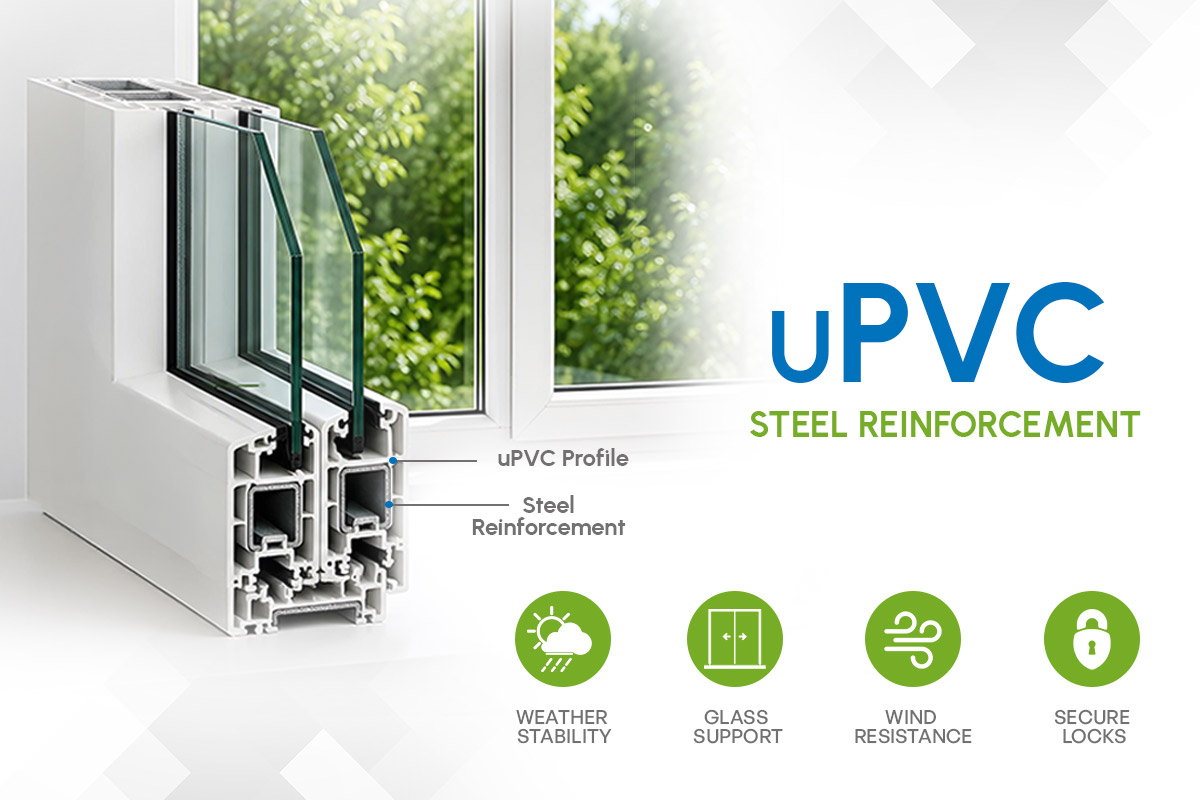
uPVC doors are made by first preparing the plastic material and then forming it into hollow profiles. The profiles are cut to the required size, reinforced with galvanised steel, and joined at the corners. After this, the required glass and hardware are fitted.
Here’s the Step-by-Step Process
Step 1: Making of the uPVC Profiles
Mixing: Plastic powder is mixed with additives such as UV stabilisers and colours. These help the profile handle sunlight and keep its finish.
Melting and Shaping: The mixture is heated and pushed through a mould. This gives the material the required profile shape.
Cooling: The hot profiles are passed through cooling tanks so they become stable in their required shape.
Step 2: Cutting and Adding Strength
Cutting: The long profiles are cut according to the required door size. The corners are also cut so that they can be joined properly.
Steel Reinforcement: Galvanised steel is placed inside the hollow profile. This gives the frame additional strength.
Hole Drilling: Holes are made for handles, locks and drainage as required.
Step 3: Final Welding and Fitting
Corner Welding: The profile corners are heated and pressed together to form the door frame.
Cleaning: Extra material around the welded corners is removed to give the frame a neat finish.
Hardware Assembly: Handles, locks, hinges and glass panels are fitted to complete the door.
Key Benefits of uPVC Doors
uPVC doors are known for their resistance to moisture, low maintenance, durability, and different design options. They can also help with insulation, noise reduction, and security when the right profile, glass, and hardware are used.
-
Weather and Moisture Resistance
uPVC doors can handle water and moisture well. They do not swell, warp, or rot when exposed to moisture like wooden doors can. This makes them useful in places with heavy rain, high humidity, and coastal weather.
-
Energy Efficiency and Thermal Insulation
The multi-chambered profile helps reduce the transfer of heat through the door. This can help keep the home more comfortable during hot weather. It may also reduce the need to run air conditioning for long periods.
-
Low Maintenance
uPVC doors are easier to maintain than wooden doors. There is no regular painting, polishing or varnishing needed. For normal cleaning, use a soft cloth with mild soap and water.
-
Durability and Termite Resistance
Termites do not feed on uPVC, so it does not face the same termite problem as wood. The material is also resistant to rust and corrosion. With a good-quality profile, proper hardware and correct installation, a uPVC door can be used for many years.
-
Sound Insulation
A uPVC door can help reduce outside noise. The result depends on the profile, glass and sealing used. Multi-chambered profiles and suitable glazing can help reduce noise entering the home. This can be useful for houses near busy roads or other noisy places.
-
Security
The security of a uPVC door depends on the profile, reinforcement, locks and other hardware. Many uPVC doors use multi-point locking systems that lock the door at more than one point.
Some reinforced uPVC doors, including options from Aparna Venster, use galvanised steel reinforcement inside the profile. This gives the door additional strength and can make forced entry more difficult.
-
Fire Safety
Some uPVC materials have self-extinguishing properties, so the material may stop burning after the flame source is removed. Fire performance depends on the material and the complete door system. If fire safety is an important requirement, check the product’s fire-rating details.
-
Design Versatility
uPVC doors are available in different colours, finishes, and designs. There are also wood-finish options and different glass choices. Frosted, toughened, and decorative glass can be selected depending on the design and privacy needed.
-
Cost-Effectiveness
The price of a uPVC door depends on its size, profile, glass, hardware, and design. One advantage is that it does not need regular painting, polishing, or varnishing. This can help keep maintenance costs lower over the years.
Types of uPVC Doors
Casement doors are fixed with hinges on one side and open inwards or outwards. They are commonly used for main entrances and balcony openings.
Sliding Doors
Sliding doors move sideways on a track instead of opening into the room. They are useful for balconies, patios, and places where floor space is limited.
Slide and Fold Doors
These doors have multiple panels that fold and move to one side. When opened, they create a wider opening. They are commonly used for living areas that open towards a balcony, patio, or garden.
French Doors
French doors have two panels that open from the centre. They give a traditional look and can be used between indoor areas and balconies or patios.
Mesh Doors
Mesh doors have an insect mesh that allows air and natural light to enter while keeping insects out. They can be useful for balconies and ground-floor homes.
Aparna Venster offers sliding doors and slide-and-fold doors along with its uPVC door range.
Where uPVC Doors Are Commonly Used
uPVC doors can be used in homes, offices, hotels, schools, hospitals, and other buildings. They are used in different areas because they are easy to maintain, handle moisture well, and come in different designs.
Residential Spaces
- Main entrance: For security, durability, and appearance.
- Balconies and patios: They can handle moisture and changing weather.
- Bathrooms and kitchens: Suitable for areas where moisture is common.
- Interior rooms: They can give a modern look and help reduce some outside noise.
Commercial Spaces
- Offices: For entrances, cabins, and meeting rooms.
- Hotels and restaurants: For balconies, patios, and outdoor-facing areas.
- Washrooms and utility areas: Easy to clean and maintain.
Institutional Spaces
- Schools and hospitals: They are easy to clean and maintain.
- Apartments and multi-unit buildings: They can be used in individual homes and common areas where regular maintenance is needed.
Installation: What to Expect
Professional installation is recommended for uPVC doors. The basic process normally includes the following steps:
Measurement: The installer measures the opening and checks the frame size needed.
Site preparation: For a replacement, the old frame, debris, and old sealant are removed.
Checking the opening: The opening is checked to see if it is level and straight. This helps the door open, close, and seal properly.
Frame fixing: The uPVC frame is placed in the opening and adjusted before fixing it.
Sealing: The gaps around the frame are sealed to help prevent water, dust and air from entering.
Waterproofing: Additional sealing may be needed for balconies and patios that are directly exposed to rain.
Final checking: The installer checks the door, hinges, handles and locks to make sure they work properly.
Good installation is important for the performance of the door. A good-quality door can also have problems if it is not fitted correctly.
How to Maintain a uPVC Door
uPVC doors do not need a lot of maintenance. A few simple checks and regular cleaning can help keep the door working properly.
Clean the Door and Frame
Dust can collect around the frame, corners and tracks. Wipe the surface with a soft cloth and mild soapy water every few months. For difficult marks, use a cleaner that is suitable for uPVC. Avoid rough scrubbers because they can scratch the surface.
Keep the Hinges and Locks Smooth
If the door makes a sound while opening or closing, check the hinges. The same applies if the handle or lock feels tight. A little suitable lubricant on the moving parts can keep them working smoothly.
Do not force the handle or lock if it is not moving properly. It is better to get it checked.
Check the Rubber Seals
The rubber seals around the door stop water, dust, and outside air from coming inside. Check them once or twice a year.
Look for cracks, loose sections, or gaps. If the seal is damaged, replace it.
Check the Door Alignment
Open and close the door a few times and see how it moves. If it starts rubbing against the frame or does not close properly, the door may need adjustment.
Do not ignore small changes in the way the door works. Getting it checked early can avoid bigger problems with the hardware.
Keep the Drainage Open
Some uPVC doors have small drainage holes at the bottom of the frame. These holes allow rainwater to flow out.
Dust and dirt can block them over time. Check them occasionally and clean them if needed, especially for balcony and exterior doors.
Avoid Harsh Cleaning Products
Do not use rough scrubbers, abrasive powders or strong chemicals on the uPVC surface. They can damage the finish.
For normal cleaning, a soft cloth with mild soap and water is enough.
Common Mistakes to Avoid When Choosing uPVC Doors
Buying a uPVC door is not only about the colour or design. There are a few other things you should check before placing the order.
1. Choosing Only Based on Price
A cheaper door may look like a good option, but check the specifications before buying. The quality of the profile, reinforcement, glass, and hardware can be different.
So, don’t compare doors only by their price. Compare what you are getting for that price.
2. Not Checking the Hardware
Handles, hinges, and locks are used every day, so their quality matters. Poor hardware can make the door difficult to operate and can also affect its security.
Ask the manufacturer or seller what type of hardware is being used before you buy the door.
3. Ignoring Installation Quality
The door may be good, but poor installation can still cause problems. The frame has to be placed correctly, fixed properly, and sealed well.
Choose someone who has experience in installing uPVC doors. After installation, open and close the door yourself and check the locks and handles.
4. Choosing the Wrong Door for the Space
Not every door type will work well in every place.
For example, a large sliding or slide-and-fold door can be a good option for a balcony. For a smaller opening, a casement door may work better.
Before choosing the door, look at the available space and think about how often you will use it.
5. Thinking uPVC Needs No Maintenance
uPVC needs less maintenance, but that does not mean you can completely forget about it.
Clean the door regularly. Check the rubber seals and make sure the locks, handles, and hinges are working properly. These small checks can keep the door in good condition.
uPVC vs PVC Doors: The Core Difference
PVC and uPVC may look similar, but there is a difference between the two.
PVC contains plasticisers. These make the material softer and more flexible. uPVC does not contain plasticisers, so it is harder and more rigid.
For this reason, uPVC is commonly used for doors and windows where strength and regular use are important. PVC is generally used for simpler applications.
In short, PVC is more flexible, while uPVC is more rigid.
PVC vs uPVC: Which Is Better for Doors?
uPVC is generally better for main doors and outdoor areas because it is stronger, more rigid and more weather-resistant. PVC is more flexible and suitable for simple, lightweight applications.
PVC and uPVC are low-maintenance materials, but they differ in rigidity, strength and outdoor performance. This comparison helps homeowners, architects and builders choose the right material for doors and exterior applications in Indian weather conditions.
Comparison of PVC and uPVC for Doors and Outdoor Use
| Feature | PVC | uPVC |
|---|---|---|
| Flexibility | More flexible | More rigid |
| Strength | Lower structural strength | Higher structural strength |
| Weather Resistance | Good for selected applications | Better for exterior and exposed areas |
| Maintenance | Low maintenance | Low maintenance |
| Best Suited For | Simple and lightweight applications | Main doors, exterior doors and outdoor areas |
| Durability | Good for lightweight indoor uses | Better for long-term outdoor use |
Why Choose Aparna Venster
Aparna Venster is part of the Aparna Group. The group has more than 30 years of experience in building materials, while Aparna Venster has more than 15 years of experience in uPVC fenestration.
Every Aparna Venster uPVC door is:
- Made using imported German machinery.
- Made with lead-free uPVC profiles and galvanised steel reinforcement.
- Supported by site survey, design, fabrication, delivery, installation, and after-sales service.
- Available in different laminate finishes, glass options, colours, mesh, grills and hardware.
Conclusion
uPVC doors are a good option if you want a door that is durable and easy to maintain. They can handle moisture and changing weather, and there are different designs available for different parts of the home.
You can choose a main door, sliding door, or slide-and-fold door depending on the space you have and how you want to use it. Installation also matters, so make sure the door is fitted properly.
Looking for a uPVC door for your home? Explore Aparna Venster’s uPVC door range or contact the team to know more.
FAQ
What are uPVC doors made of?
uPVC doors are made from unplasticised polyvinyl chloride. It is a rigid plastic material. Some profiles also have galvanised steel reinforcement inside for extra strength.
Are uPVC doors good for Indian weather?
Yes. uPVC doors can handle India’s heat, rain, and humidity. They do not absorb water, so they will not swell, rot, or warp like wooden doors can.
How long do uPVC doors last?
A good-quality uPVC door can last for many years if it is installed properly and maintained regularly. Its actual lifespan depends on the profile, hardware, installation, and weather conditions.
What is the difference between PVC and uPVC doors?
PVC contains plasticisers, which make it softer and more flexible. uPVC does not contain them, so it is more rigid and is commonly used for doors and windows.
Are uPVC doors secure?
Yes. uPVC doors can provide good security with quality locks and hardware. Many models have multi-point locking systems. Steel reinforcement inside the profile can provide additional strength.
Do uPVC doors need a lot of maintenance?
No. They are quite easy to maintain. Clean them with mild soap and water, and check the seals and hardware occasionally.
Can uPVC doors be customised?
Yes. You can choose different colours, finishes, glass options, and designs. Mesh, grills, and hardware can also be selected according to the door and where it will be used.
Are uPVC doors fire-safe?
Some uPVC materials have self-extinguishing properties. However, fire performance depends on the material and the complete door system. If this is important for your project, check the product specifications.
Where should I install uPVC doors in my home?
uPVC doors can be used for main entrances, balconies, patios, kitchens, and other areas of the home. They are especially useful where moisture and weather exposure are concerns.
Are uPVC doors eco-friendly?
uPVC can be recycled, and the doors have a long service life. The insulation provided by the profile can also help with indoor comfort and reduce the need for cooling.
Related posts:
 Bedroom Window Sizes Explained: A Complete Guide (2026)
 uPVC Doors: Simple Guide to Types, Benefits and Uses in Homes
 uPVC Window Designs for Homes: Types, Benefits and Buying Guide
 uPVC Steel Reinforcement for Windows & Doors: Types, Benefits & Applications
 What Is a uPVC Ventilator? Benefits, Types and Uses Explained
 English