
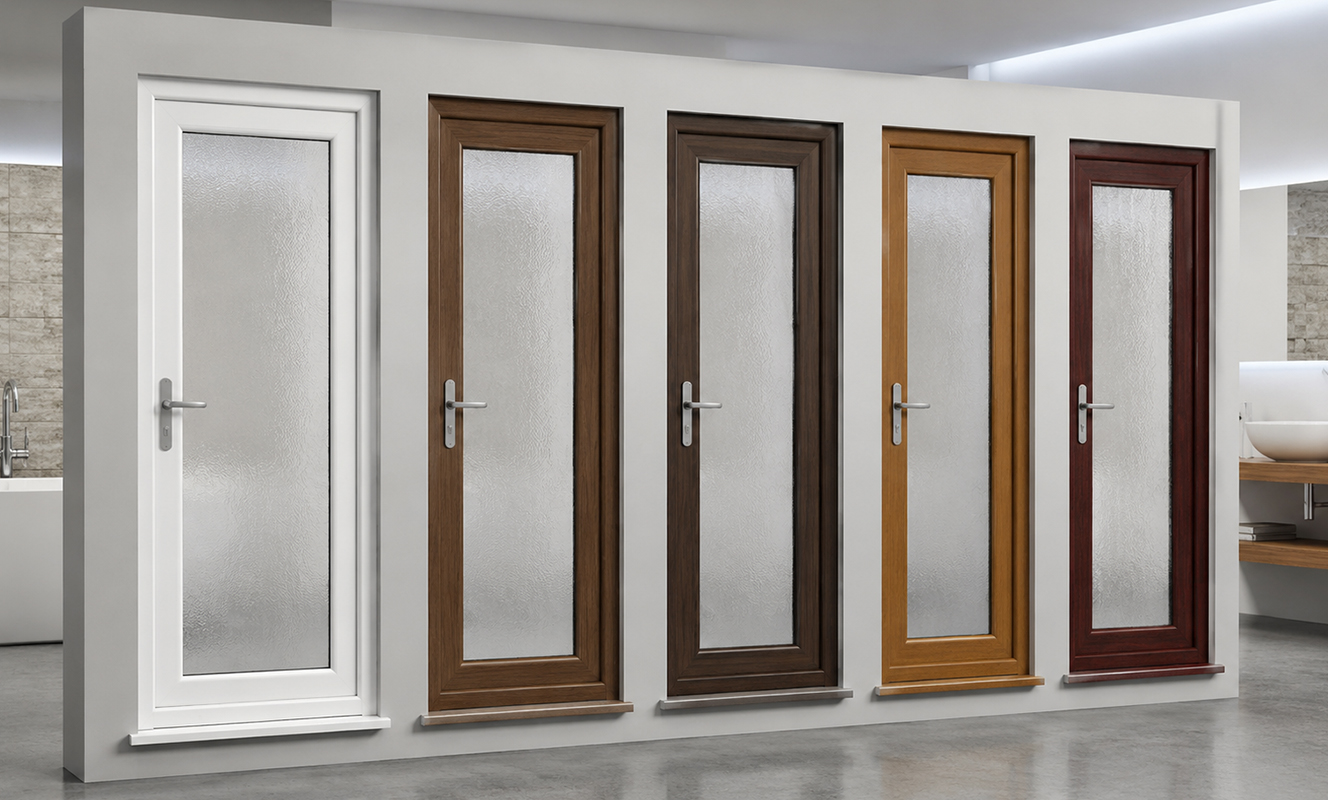
uPVC Bathroom Doors: Benefits, Types, and Why They Are Used in Homes
Bathroom doors are prone to constant water splashes, steam, and humidity. Many homes still use wooden or basic doors for bathrooms. Initially, they look fine, but over a period of time, they show wear and tear. This is where a uPVC bathroom door comes in.
In this guide, we’ll understand what uPVC bathroom doors are, why they are used, the types available, and what to check before choosing one.
Contents
- 1 What is a uPVC Bathroom Door?
- 2 Why uPVC Bathroom Doors Are Common in Modern Homes
- 3 Key Benefits of uPVC Bathroom Doors
- 4 Types of uPVC Bathroom Doors
- 5 Design Options and Finishes
- 6 Where uPVC Bathroom Doors Are Used
- 7 Installation Process
- 8 Maintenance Tips
- 9 Cost of uPVC Bathroom Doors
- 10 Common Mistakes to Avoid
- 11 Summary
- 12 FAQs
What is a uPVC Bathroom Door?
A uPVC bathroom door is made from unplasticised polyvinyl chloride. It’s a rigid form of plastic, but stronger and more stable than regular PVC.
These doors are designed for areas like bathrooms, wash areas, and utility spaces.
Unlike wood, uPVC does not absorb water or rust, even in the long run.
Why uPVC Bathroom Doors Are Common in Modern Homes
Constant Exposure to Water
Bathrooms are always exposed to water and steam, and a traditional material like wood can’t handle it. So, using uPVC doors in the bathroom can help you in the long run.
Shift Towards Low-Maintenance Homes
People don’t want high-maintenance materials anymore because repainting or repairing doors frequently is a huge task, and it also burns a hole in your pocket.. uPVC doors need very little upkeep and don’t require regular cleaning.
Practical Choice for Everyday Use
These doors are simple to use without extra complications. They open, close, and last long, serving the main purposes.
Key Benefits of uPVC Bathroom Doors
Strong Water Resistance
uPVC bathroom doors do not absorb moisture, so they do not swell or get damaged due to water.
Long-Term Durability
uPVC is a sturdy, durable material, so it does not crack or warp easily, and remains stable throughout the year.
Termite-Free
Wooden doors often face termite issues, particularly in wet areas. On the other hand, uPVC is a synthetic plastic polymer that contains no cellulose or hemicellulose, making the material resistant to termites.
Hygienic Surface
uPVC is a hygienic material because it does not hold moisture, preventing the growth of mould or bacteria.
Low Maintenance
These bathroom doors do not require repainting or polishing because uPVC is treated with titanium dioxide to resist UV rays, which prevents them from turning yellow or changing. They can be cleaned just with water and a soft cloth.
Lightweight but Functional
They are easy to handle because they are lighter than wood. uPVC’s molecular structure and its advanced engineering make it easy to handle without compromising on functionality.
Types of uPVC Bathroom Doors
There are different types of uPVC bathroom doors to suit various requirements. Here are a few types:
Solid Panel Doors
These types of doors offer a simple design with no gaps and a cut section. So they provide great privacy.
They are usually stronger and feel more stable while using. Also, as the surface is fully closed, cleaning becomes easier.
Hollow Core Doors
Hollow core doors are lighter than solid door panels because they are not completely filled inside, which makes them easier to handle and install. They are often used in houses or places where the budget is a concern.
But if the material is too thin, it may not feel strong. So check the thickness before choosing.
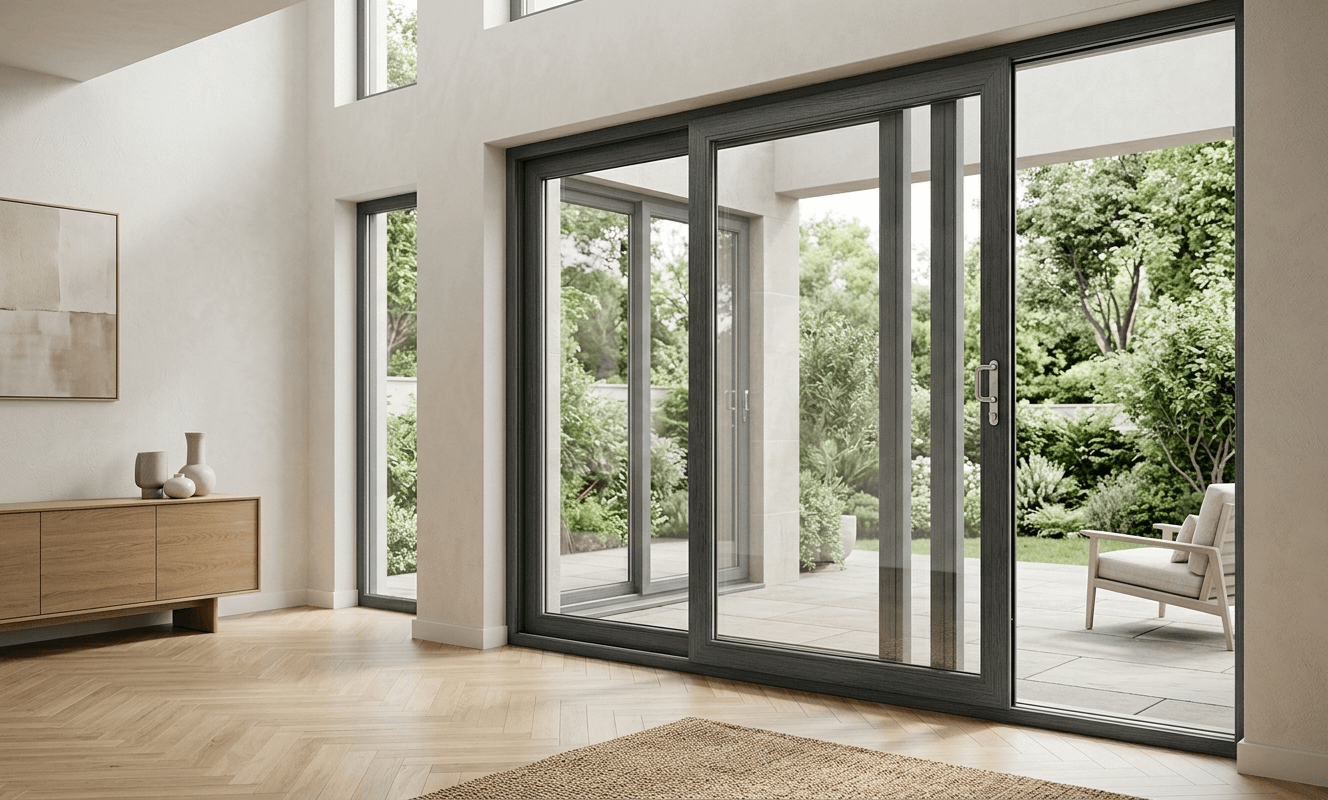
Sliding Doors
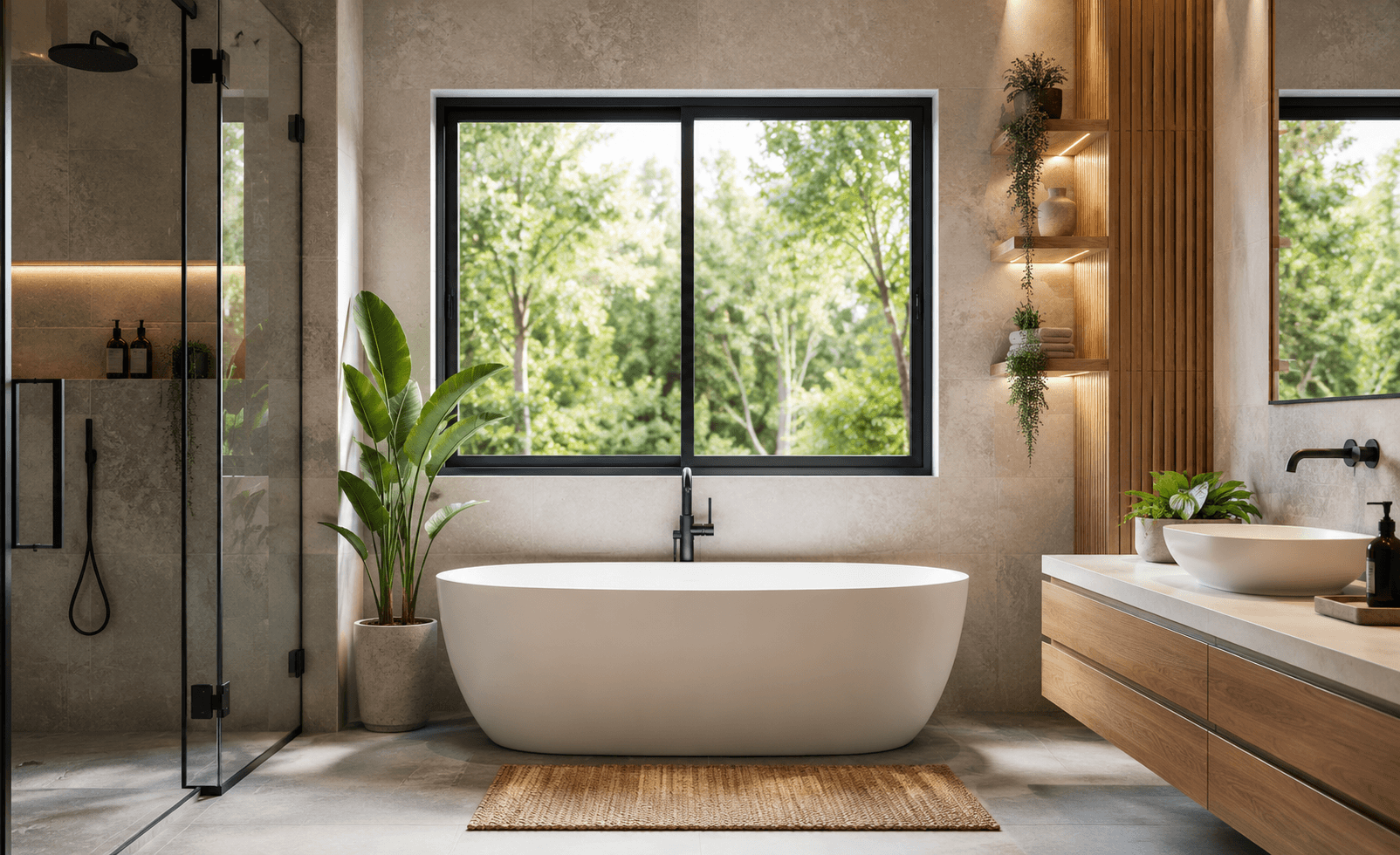
Sliding doors are mainly used when space is an issue. They glide on tracks instead of opening outward or inward. Perfect for small bathrooms.
A proper installation of the track system is necessary for a smooth movement.
Folding Doors
Folding doors are made of multiple panels that fold to one side when opened. These are good for compact spaces or space constraint batrooms, where even sliding doors might not be ideal.
Design Options and Finishes
uPVC bathroom doors come in various designa nd finish options to make your spaces look attractive. Earlier, they were available only in standard white, but these days, they are available in many options.
Matte and glossy finishes, wood-like textures, neutral colours like grey and beige, and basic patterns or panel designs are some of the popular options to match modern interiors.
Where uPVC Bathroom Doors Are Used
They can be used in various places like:
- Residential bathrooms
- Rental properties
- Utility wash areas
- Commercial washrooms
Installation Process
Installation is not very complex, but it should be done properly.
Measure the opening correctly: First, the measurement of the opening is taken at three different points – top, middle, and bottom.
Fix the frame tightly: The frame is fixed at this stage and secured with sealants to prevent seepage.
Align the door panel: Doors are mounted on the hinges and aligned properly.
Check closing and locking: This is the final stage, where doors are opened and closed several times to check issues, if any.
Maintenance Tips
They are simple and easy to maintain
- Clean with a damp cloth, once in a while
- Avoid the use of harsh chemical cleaners
- Don’t slam the door too hard
- Check hinges and locks occasionally
That’s all. No heavy maintenance required.
Cost of uPVC Bathroom Doors
Cost depends on several factors like the size of the door, type, thickness, quality, and hardware used. So, it has no fixed price.
Common Mistakes to Avoid
Choosing Low-Quality Material
Very thin or low-grade uPVC may not last long.
Ignoring Hardware Quality
Handles, hinges, and locks matter. Poor hardware affects performance.
Improper Installation
Even a good door won’t work well if it is not installed properly.
Summary
A uPVC bathroom door is not about looks alone. It’s about performance in a wet environment.
It handles moisture. It needs less maintenance. And it lasts longer than many traditional options in bathrooms. It may not feel like a big decision. But over time, it makes daily use easier.
If you are looking to upgrade your bathroom doors, then look no further than Aparna Venster.
Venster uses materials that are procured in a state-of-the-art manufacturing facility, with machinery imported from Germany, to offer high-quality bathroom doors. All the material that goes into making are free from lead. With approximately 1.8 million installations, Venster focuses on high-performance solutions designed to enhance security, privacy, and ventilation in bathrooms.
FAQs
Are uPVC bathroom doors waterproof?
Yes, uPVC doors are water-resistant. They do not absorb moisture, which makes them suitable for bathroom use.
Is uPVC better than wood for bathroom doors?
Yes, for bathroom doors, uPVC performs better in moisture compared to wood.
Do uPVC bathroom doors last long?
Yes, they can last for many years without major issues. With basic care, the lifespan can be extended even further.
Are uPVC doors safe for home use?
Yes, uPVC doors are safe for home use because they come with proper locking options.
Can uPVC bathroom doors be customised?
Yes, they can be customised to different sizes and designs. They are also available in various colour options.
 English