

Are uPVC Windows Fire Resistant? Facts, Ratings and Safety Guide
Are uPVC windows fire resistant? Partly. uPVC is flame retardant and self-extinguishing, so it does not feed a fire the way timber does, but standard uPVC windows are not fire-rated. The frame softens at around 80°C and ignites only at very high temperatures, and ordinary glass breaks in a fire. For rated protection, you need windows tested and certified to a fire-resistance (EI) rating.
Fire resistant vs fire-rated: what is the difference?
Flame retardant means a material resists ignition and does not keep burning once the flame is removed. Fire-rated means a complete window or door assembly has been tested and certified to hold back flames and heat for a set time, for example EI 30, 60 or 120 minutes. E stands for integrity and I for insulation. uPVC meets the first description, but standard uPVC windows do not carry the second.
How uPVC behaves in a fire
- High chlorine content (about 57% of PVC by weight) makes rigid uPVC flame retardant.
- Self-extinguishing: it generally stops burning when the flame source is removed. Rigid PVC compounds are often tested to UL 94 V-0, so ask for the report for your specific profile.
- Softens at about 80°C and deforms under sustained heat, well below flame temperatures.
- Ignites only at very high temperatures, commonly cited at roughly 390°C to 450°C.
- Releases hydrogen chloride gas and smoke when it burns, which is why alarms and escape routes matter in any fire plan.
- Steel reinforcement inside the frame helps it hold its shape longer. See uPVC steel reinforcement.
uPVC vs aluminium vs wood in a fire
Are standard uPVC windows fire-rated?
No. Fire-rated windows are separate certified systems, typically steel-framed with special glass, supplied with a test report. If a fire rating matters for your project, such as a staircase, a boundary wall or a commercial building, ask for the EI rating and the third-party report before you buy, and confirm requirements with your architect or fire consultant.
Fire safety tips for windows and doors
- Keep at least one openable window per room clear for escape. Choose casement or tilt and turn windows over fixed panels where you need an emergency exit.
- Choose certified, steel-reinforced profiles from a reputable manufacturer.
- Install smoke alarms, and keep curtains, paper and flammables away from window frames and heaters.
- Make sure installation follows local building and fire codes.
Other benefits of uPVC windows
Fire safety is one factor. uPVC windows also offer:
- Resistance to moisture, corrosion, mold and termites
- Soundproofing against outside noise
- Better insulation and energy savings with double glazing
- High UV resistance
- Wood-finish colours and styles to match your home
Read also: Top Benefits of uPVC Windows that Save Costs
FAQs
Are uPVC windows fire resistant?
Partly. uPVC is flame retardant and self-extinguishing, but standard uPVC windows are not fire-rated.
Can uPVC windows be fire-rated?
Fire-rated windows are separately tested and certified systems with an EI rating. Standard uPVC windows do not carry one, so ask the manufacturer for a certified product and test report if you need it.
Is uPVC heat resistant?
uPVC handles normal weather and indoor temperatures well. It begins to soften at around 80°C and can deform under sustained high heat or fire.
Do uPVC windows release toxic fumes in a fire?
Burning PVC releases hydrogen chloride gas and smoke. Smoke alarms, clear escape routes and openable windows are the key safety measures.
What is the heat capacity of uPVC?
The specific heat of rigid PVC is roughly 0.9 to 1.0 J/g·K, which is why it warms and cools slowly.
Choosing safe, durable uPVC windows? Plan My Windows with our team or visit your nearest experience centre.
Related posts:
 uPVC Doors and Windows in Bengaluru: Types, Features and Buying Guide
 Top uPVC Windows and Doors in Kokapet, Hyderabad: A Guide for High-Rise Homes
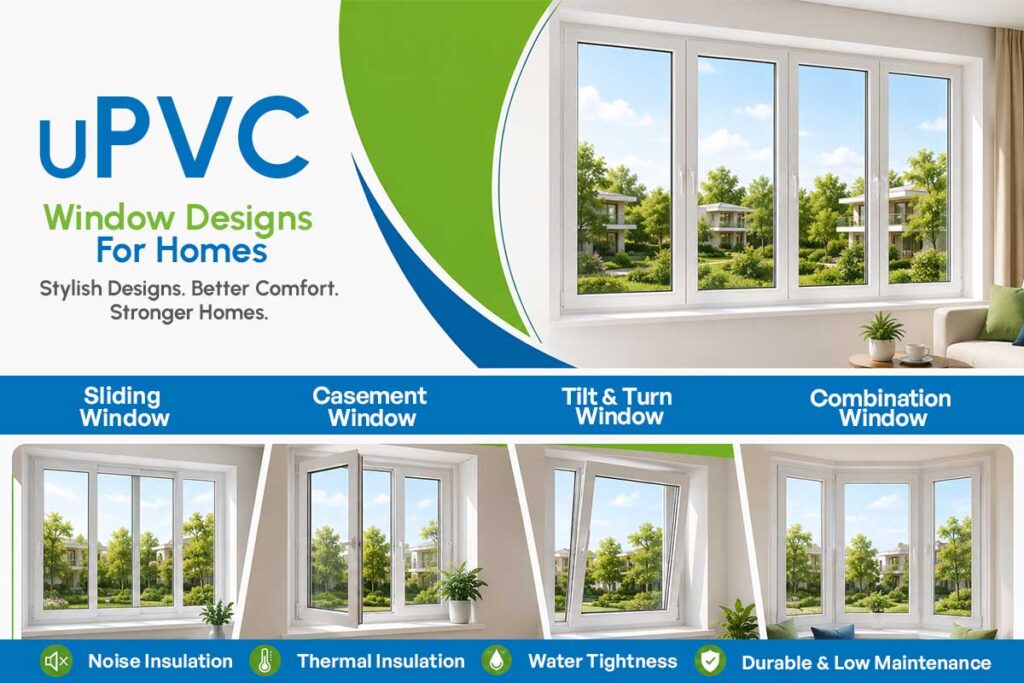 uPVC Window Designs for Homes: Types, Benefits and Buying Guide
 Bedroom Window Sizes Explained: A Complete Guide
 How Many Doors Should a House Have as per Vastu? Count, Size and Placement Guide
 English